How geopolitics is shaping our energy future
13th October 2026
Grant Quick Recovery Cylinders: Enabling low-carbon heating
13th October 2026From potential to progress: Ireland’s biomethane story in 2026
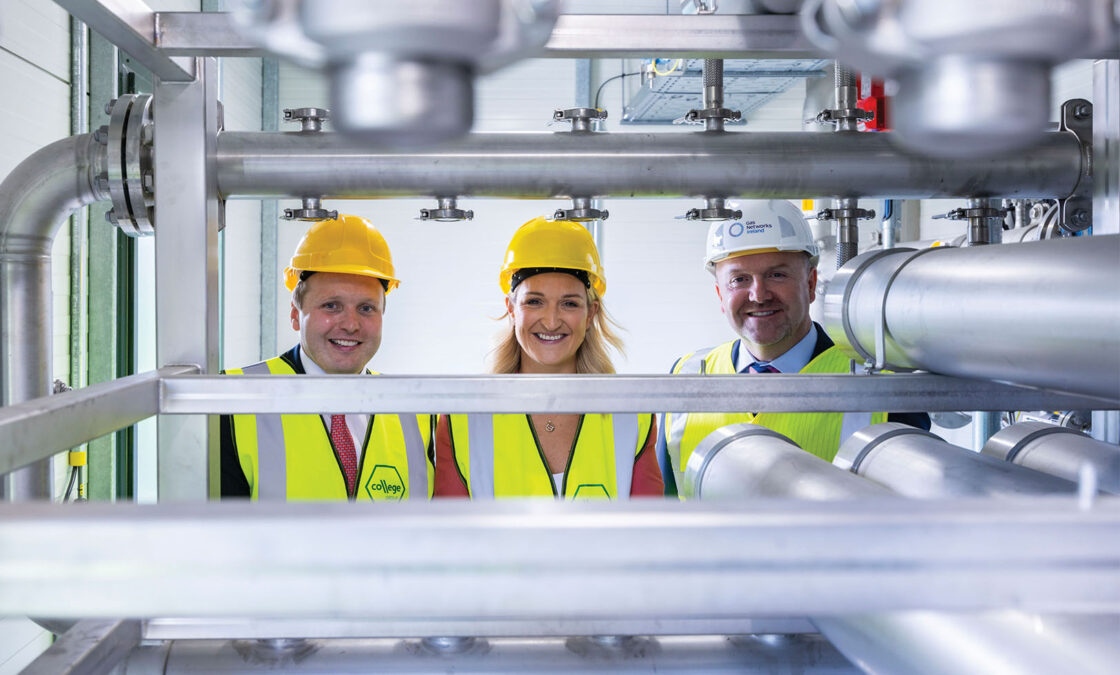
At the official launch of College Group’s connection to the gas network (L-R) John Paul Gilroy, Commercial Director, College Group; Minister for Foreign Affairs and Trade, Helen McEntee TD; and David Kelly, Chief Executive Officer, Gas Networks Ireland.
Ireland’s biomethane potential is well documented. A 2017 European Commission study identified Ireland as having the highest potential for biomethane production per capita in the EU1.
Ireland has the world class biomethane-ready 14,758km gas network, agricultural resources, organic feedstocks, and technical capability to develop a significant indigenous renewable gas industry. Despite these market advantages, Ireland remains significantly behind its European neighbours in terms of biomethane production but 2026 has seen real progress and Gas Networks Ireland continues to advocate for the nascent indigenous industry.
This has been a year of tangible progress for biomethane, from connections to the gas network and innovative industrial applications, to major infrastructure investment that will enable producers located far from the existing gas network to inject their renewable gas into it.
Mitchelstown CGI: Creating a new route for biomethane
In October 2026, Gas Networks Ireland’s €32 million Central Grid Injection (CGI) facility in Mitchelstown, County Cork, was officially opened by Taoiseach Micheál Martin TD. The facility is designed to provide a new route to market for biomethane producers that are too far from the existing gas network to connect directly by pipeline.
Rather than requiring every producer to build its own pipeline connection, biomethane can be transported by trailer to Mitchelstown and injected into the national network from a central point, which is the CGI.
With capacity to inject up to 700GWh of biomethane annually, Mitchelstown could accommodate the equivalent of approximately 12 per cent of the Government’s 2030 target of 5.7TWh of indigenous biomethane production and could deliver estimated emissions savings of around 130,000 tonnes of CO2 each year when fully operational.
Speaking at the official opening of Gas Networks Ireland’s CGI facility in Mitchelstown, the Taoiseach said: “The opening of the Mitchelstown Central Grid Injection facility is an important milestone in Ireland’s renewable energy journey and in the development of our indigenous biomethane industry.
“Ireland has set an ambitious target for biomethane production by 2030, and delivering the infrastructure to connect this renewable gas to our national network is a vital element in helping to achieve that goal.
“This investment also has the potential to create new economic opportunities in the agricultural sector, providing farmers and rural businesses with opportunities to diversify their income while contributing to our climate and energy security objectives.”
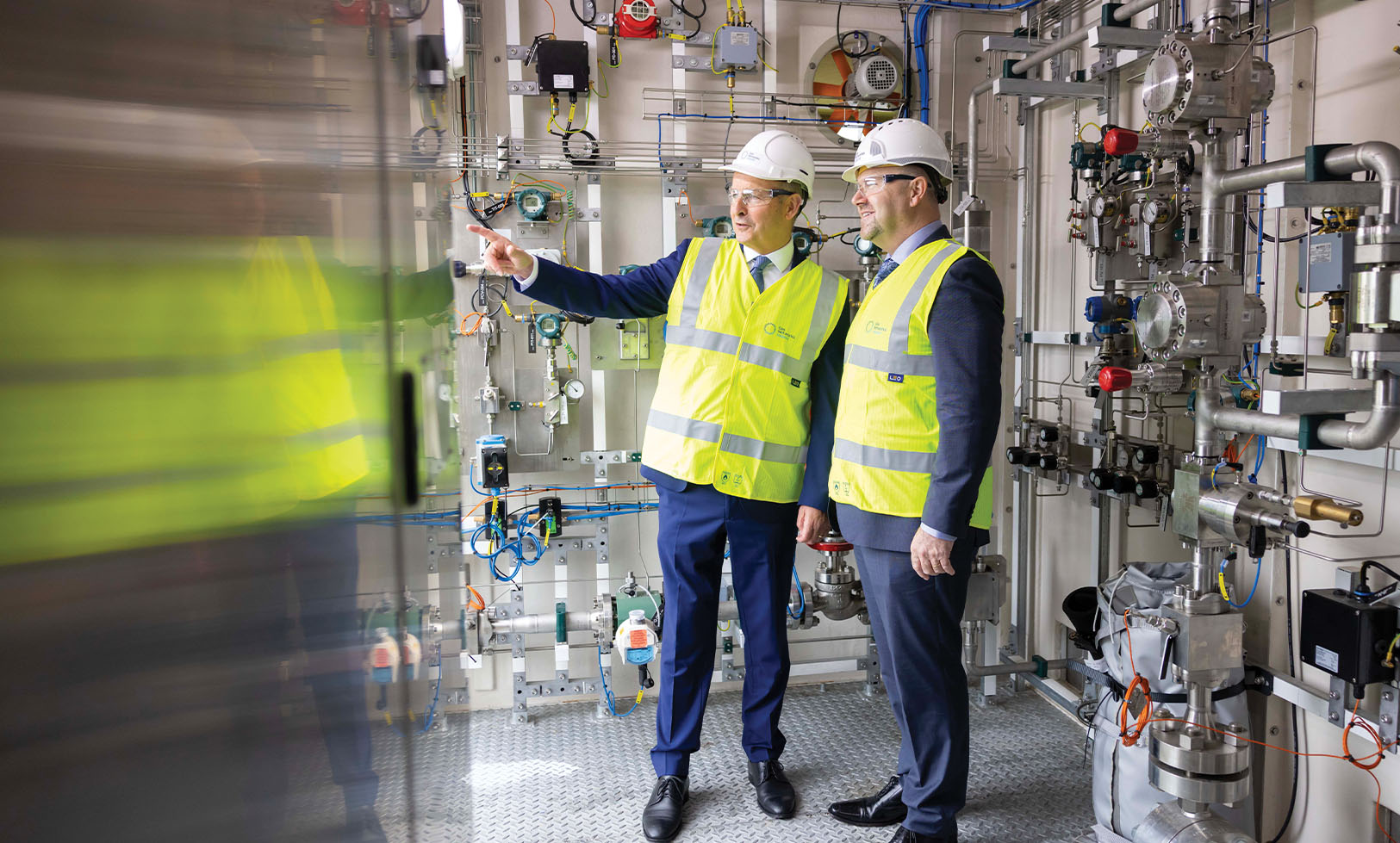
Taoiseach Micheál Martin TD opens Gas Networks Ireland’s new €32 million biomethane CGI facility In Mitchelstown, pictured with Gas Networks Ireland’s CEO David Kelly.
The Bia Energy connection: A first for Ireland
August 2026 brought two landmark moments for Ireland’s biomethane industry. The first of these was when Gas Networks Ireland connected Bia Energy’s €90 million renewable biomethane facility at Huntstown, County Dublin, directly to the national gas network.
Officially launched by Minister for Agriculture, Food and the Marine Martin Heydon TD, this marked the first time a biomethane production plant was directly connected to Ireland’s national gas network. The facility can produce up to 120GWh of biomethane annually at full capacity.
Minister Heydon said: “The connection of Bia Energy’s anaerobic digestion facility at Huntstown represents a significant step forward in the development of Ireland’s renewable gas sector. It demonstrates how agricultural and organic waste can be converted into a valuable renewable energy source, reducing emissions and enhancing energy security.
“The project also delivers benefits for agriculture through the production of digestate, which can be used as an alternative to chemical fertilisers, supporting more sustainable farming practices and a circular economy. Last month, the Government started issuing €19 million in funding to projects such as Bia Energy’s Huntstown facility that were successful under the 2024 Biomethane Capital Grant Scheme.”
The facility demonstrates the circular benefits of anaerobic digestion. The biomethane production process also produces a digestate by-product which can be used as an alternative to chemical fertilisers. Bia Energy estimates that its Dublin facility alone will help replace approximately 3,000 tonnes of chemical fertiliser each year.
College Group: Circular economy in action
Later in August 2026, Gas Networks Ireland connected College Group’s €30 million biomethane facility in Nobber, County Meath, to the national gas network.
Officially launched by Minister for Foreign Affairs and Trade Helen McEntee TD, the facility has the capacity to produce up to 75GWh of biomethane annually, transforming food and agri-food by-products into renewable gas.
What makes College Group particularly interesting is how it demonstrates the circularity of biomethane in practice. The company is using some of the renewable gas to power its own operations and BioCNG vehicles, while also injecting biomethane into the national network.
Minister McEntee described the project as a great example of the circular economy in action: “This facility is a great example of the circular economy in action, taking food and agri-food by-products and transforming them into a valuable source of renewable energy. It is also an important investment in the local economy, supporting jobs and demonstrating that the transition to a lower-carbon economy can deliver real opportunities for communities across Ireland.
“Projects such as this also have an important role to play in strengthening Ireland’s energy security. Producing more of our own renewable energy here in Ireland from resources generated within our own economy, means greater resilience and less reliance on imported energy.”