

Trading essential for energy transition
14th October 2026
New Flexibility Needs Assessment supports a renewable-led electricity system
14th October 2026The North’s ‘energy revolution’
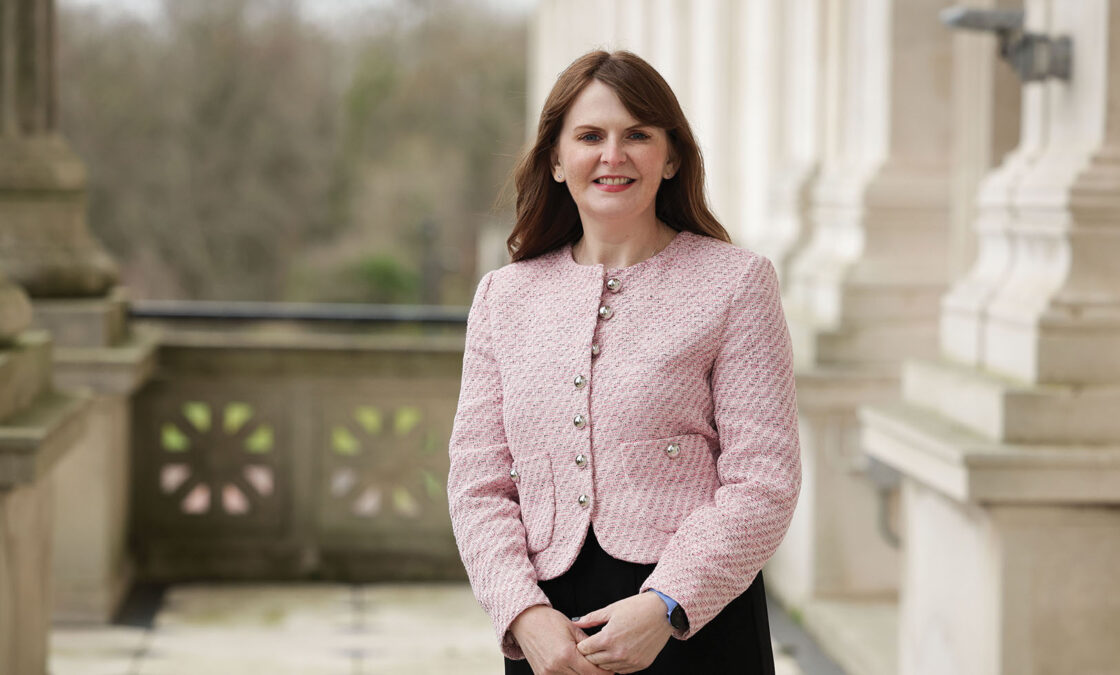
The North’s Economy Minister Caoimhe Archibald MLA outlines the progress being made in the region’s “energy revolution”, the work underway to achieve its renewable targets, and the importance of collaboration with its neighbours.
Caoimhe Archibald MLA says that, in the last year, “the need to end our reliance on imported fossil fuels has become even more clear” due to the US-Israeli attacks on Iran and Russia’s continued invasion of Ukraine.
The Minister highlights the potential of a more self-sufficient green economy, noting that the low carbon and renewable energy sector generated approximately £1.6 billion in turnover in 2024, according to figures from the Office for National Statistics (ONS).
To realise this potential, Archibald says her focus is “to accelerate progress on laying the foundations for lasting price stability, sustainable investment, and an economy powered by reliable and affordable clean energy”.
Energy progress
The Executive’s Energy Strategy was published in December 2021 and set targets of 80 per cent renewable electricity consumption, a 25 per cent reduction in energy consumption from buildings and industry, and an annual green economy turnover of £2 billion by 2030.
The mid-term review of the strategy found that there was only one per cent progress toward the energy savings target, however, Archibald states this is not an accurate figure: “We are now at 15 per cent of the strategy’s target, lower than what is actually being achieved due to the lag nature of reporting against policy interventions.”
Archibald adds: “We have a clear line of sight on how to achieve the energy savings target to 2030 even if it will inevitably take several years into the 2030s for it to be fully reported.”
There has been more measurable progress on the renewable electricity target. The proportion of electricity generated from renewable sources in the year to June 2026 was 50 per cent of gross final electricity consumption, compared to 44 per cent in the previous period and matching the highest level previously recorded.
Archibald says previous decreases in renewable generation were mainly due to “maximising imports of cheaper imports from Britain, set against falling electricity demand”.
The Minister adds this is unlike the Republic where “the challenge is different in the need to meet rising demand driven by data centre growth”.
To continue its progress on renewable usage, in May 2026, the North became the first region between Ireland and the UK to consult on detailed geothermal regulation.
“Affordability is the critical consideration, people must see and feel the benefits of change and have confidence that this energy revolution will be fair, will be properly supported, and focused on lower and more stable energy costs for the long term.” Caoimhe Archibald MLA, Minister for the EconomyCaoimhe Archibald MLA, Minister for the Economy
Reaching 2030 targets
Despite the record levels of renewable electricity generation, more work is needed to reach the strategy’s target by 2030. Archibald says: “Continued growth in renewable electricity generation is essential in meeting our targets and opening up investment and green growth opportunities across Ireland.”
To this end, the Department for the Economy (DfE) is developing a new support scheme, the Renewable Electricity Price Guarantee (REPG), to incentivise an increase in renewable electricity generation by reducing exposure to wholesale price volatility.
The REPG is modelled on the Republic’s Renewable Energy Support Scheme (RESS) and Britain’s Contract for Difference (CfD).
It will hold auctions to offer renewable energy projects a 15-year, inflation-linked contract, with a fixed-price benchmark supply of electricity using a reference of the SEM day-ahead price.
The draft bill to deliver this scheme is currently with the Executive for agreement, and Archibald says: “Once in law, it will be used over the next 25 years to deliver lower electricity costs to households than they are paying today.”
As contained within the design plan for the rollout of smart electricity meters, published in April 2026, the Minister has asked NIE Networks to deliver first meter installations in 2028 and complete the rollout by 2030.
Archibald says that “smart metering will play an important part in tackling fuel poverty”, adding:
“I would like to prioritise delivery to lower-income households as they have the potential to benefit relatively the most.”
Additionally, the Minister notes that “an important part of our journey towards decarbonisation lies in how we heat our homes”, adding: “People deserve the security of a warm, comfortable home without being exposed to sudden rises in oil and natural gas prices.”
To support homeowners as they move to low-carbon heating options, DfE is developing a new domestic energy efficiency and low carbon heat programme.
A public consultation on this was due to be launched in summer 2026, although this has not yet occurred.
The Minister says the responses will “inform my final decisions on the measures the scheme will support, the financial support available, and the quality assurance measures that will be needed”.
Energy collaboration
DfE has previously identified electricity and energy collaboration between the North and its neighbours as critical in lowering prices, increasing stability, and maximising renewable energy.
In August 2026, DfE published an electricity interconnection policy statement setting out the guiding principles that underpin its approach to east-west electricity interconnection.
Archibald welcomes further collaboration and says: “Increased interconnection will enable us to export surplus renewable power when it is windy and import lower cost electricity when we need it.”
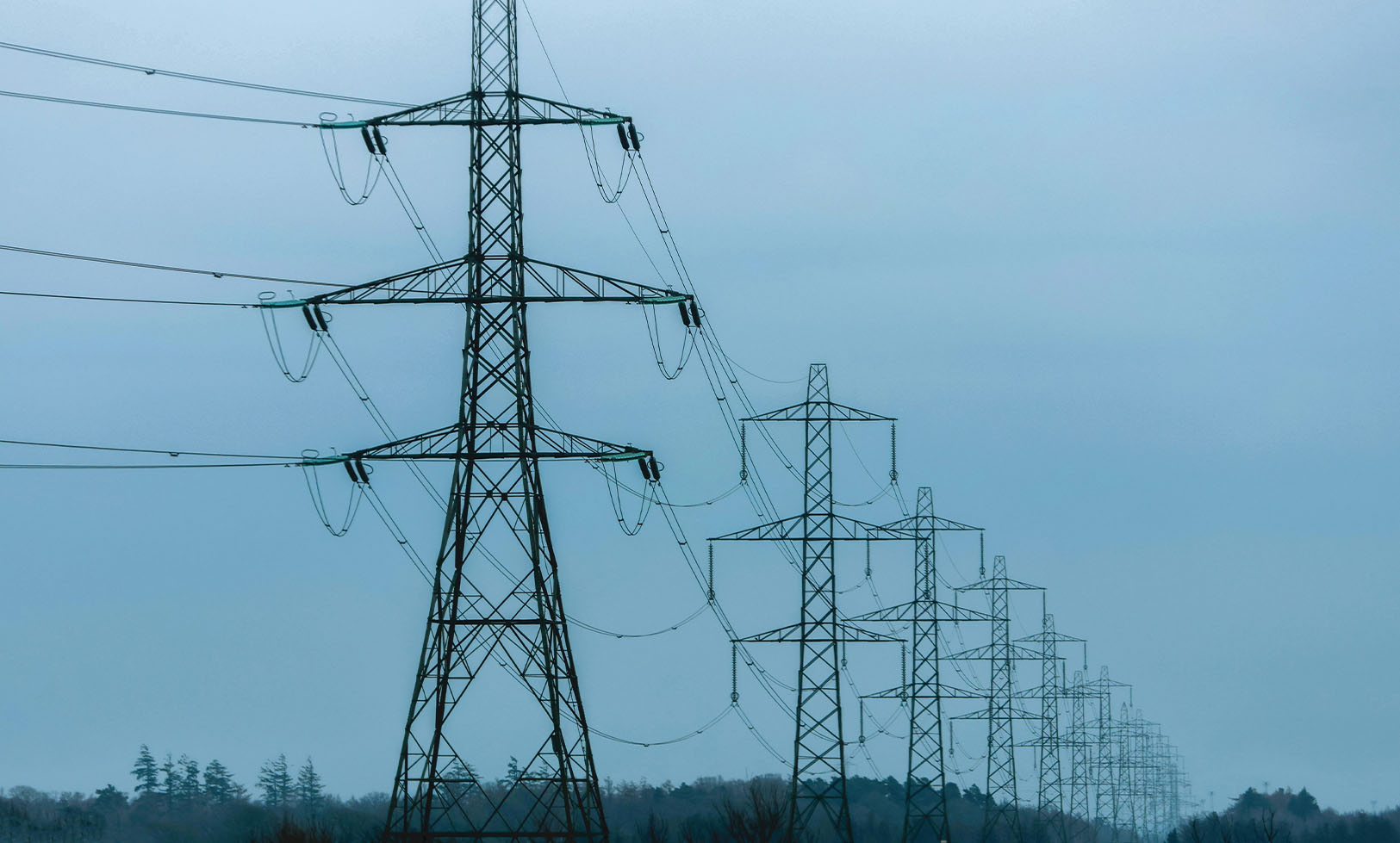
The Minister also reiterates her support for the North-South Interconnector, saying: “It is critical to reducing electricity costs for consumers across the island and at a time of global uncertainty, strengthening our all-island infrastructure is essential to delivering a secure, resilient, and affordable energy system.”
The planned 140km overhead high-voltage electricity link connecting the power grids of the Republic and the North was first proposed in 2006 and was granted planning permission in 2020. However, it is not expected to be completed by its target of the end of 2031. Construction on the estimated €350 million (£300 million) project has begun in the North.
Archibald also says she is a “strong supporter” of the Single Electricity Market (SEM), which allows power generators and energy suppliers to buy and sell electricity on an all-island basis.
The Minister adds: “It is important that affordability remains at the centre of how the SEM evolves and I welcome the work that the SEM committee is doing on its strategic direction going forward.”
As part of the Labour government’s reset in relations with the EU, the potential recoupling of the day-ahead EU internal electricity market and the British electricity wholesale market has gained prominence.
Archibald welcomes this idea, saying: “I hope that these negotiations lead to agreement in this area, as the prize in terms of cost reduction for electricity consumers on this island is a material one.”
Before the UK left the EU, both the SEM and the electrical market of Britain were part of this shared system, but since 2021 the SEM has run its day-ahead market separately, so there is no direct electricity link between the SEM and mainland Europe.
Concluding, the Minister highlights the importance of the North’s “energy revolution” in delivering tangible benefits to consumers, saying: “Affordability is the critical consideration, people must see and feel the benefits of change and have confidence that this energy revolution will be fair, will be properly supported, and focused on lower and more stable energy costs for the long term.
“I am committed to accelerating progress in the North, laying the foundations for lasting price stability, sustainable investment, and an economy that is powered by reliable, clean, affordable energy. That is the prize and I believe that it is within our reach.”
Caoimhe Archibald MLA has been the North’s Economy Minister since February 2025. She has been a Sinn Féin member of the Northern Ireland Assembly since 2016, representing East Derry.