

Accelerating the European transition to net zero
14th October 2026
Solar progressing
14th October 2026The next wave of Ireland’s energy transition
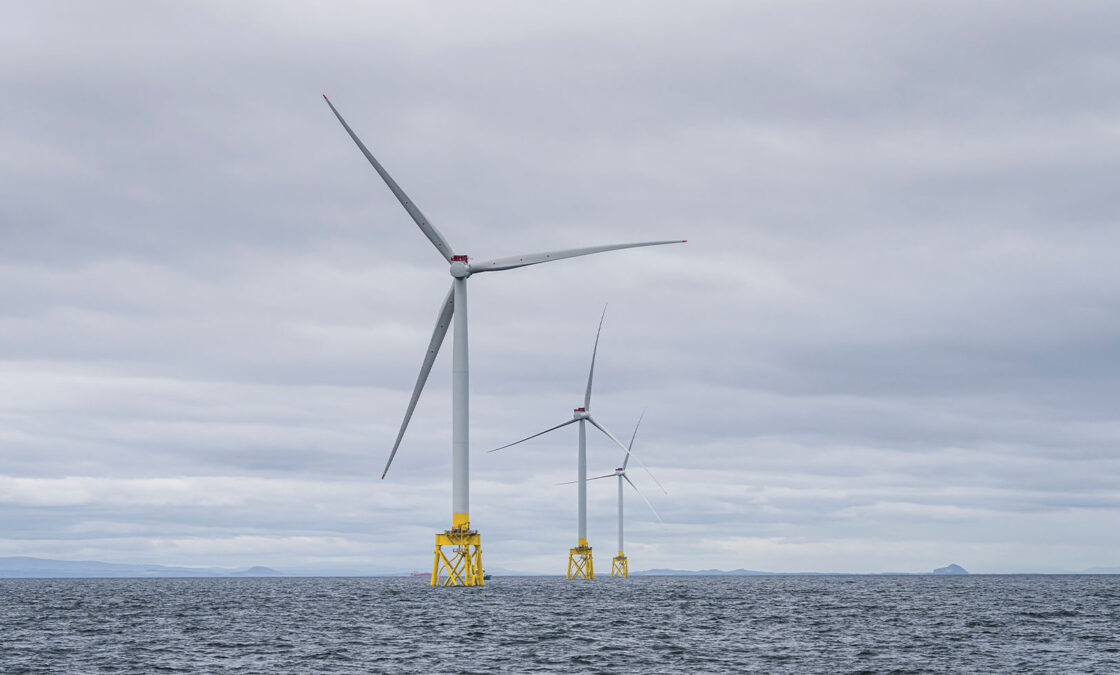
Wind turbines at Neart na Gaoithe, ESB and EDF Renewables’ wind farm off the Scottish coast.
By 2050, Ireland is expected to need over 2.5 times the electricity it uses today. As we work towards decarbonising our economy and growing our energy security, clean homegrown electricity will be required not only to keep the lights on, but to power transport, heating, and industry.
Meeting this demand means rapidly upscaling renewable energy, including unlocking the long-promised potential of offshore wind.
The winds around Ireland’s coast are among the strongest and most consistent in Europe. The first national Climate Action Plan in 2019 set the course for the delivery of large-scale offshore generation, and development is now entering a critical phase.
Competitive auctions have procured around 4 GW of capacity off the island’s coasts (one-fifth of the Government’s 20 GW by 2040 target), and planning and consenting continue at pace for the first phase of Irish Sea projects.
ESB is at the forefront of this next wave in Ireland’s energy transition. Building on offshore experience gained in Great Britain, it has ambitious plans to deliver this technology at home as part of its commitment to reach net zero carbon emissions by 2040.
Building foundations across the water
ESB’s offshore wind journey began in 2018 with the acquisition of a stake in the Galloper wind farm off the south-east coast of England, as the project entered commercial operations. The investment provided ESB with its first direct exposure to the sector and laid the foundation for a growing renewable portfolio.
In 2019, ESB acquired a 50 per cent stake in the Neart na Gaoithe offshore windfarm from EDF Renewables shortly before construction commenced. Located off the coast of Fife in Scotland, the 450 MW project has been fully operational since 2025 and can generate enough clean electricity to power around 375,000 homes while offsetting 400,000 tonnes of carbon emissions annually.
ESB also holds a 50 per cent stake in the 1.1 GW Inch Cape wind farm under construction off the Scottish coast. Developed in partnership with Red Rock Renewables, this is one of the UK’s largest offshore projects and reached financial close in early 2025, securing £3.5 billion in financing.
Having been involved since the early stages of development, ESB has gained significant experience across the offshore project lifecycle, from development and financing through to construction and operations.
“This experience in the UK has been invaluable in strengthening ESB’s expertise and credentials in a highly specialised and competitive sector,” explains Rosemary Kennnedy, Investment Manager at ESB’s Generation Trading business.
“Building and growing our offshore wind portfolio has enhanced investor confidence in ESB, strengthening our supply chain relationships and positioning us strongly to apply these learnings as we help develop Ireland’s offshore industry.”
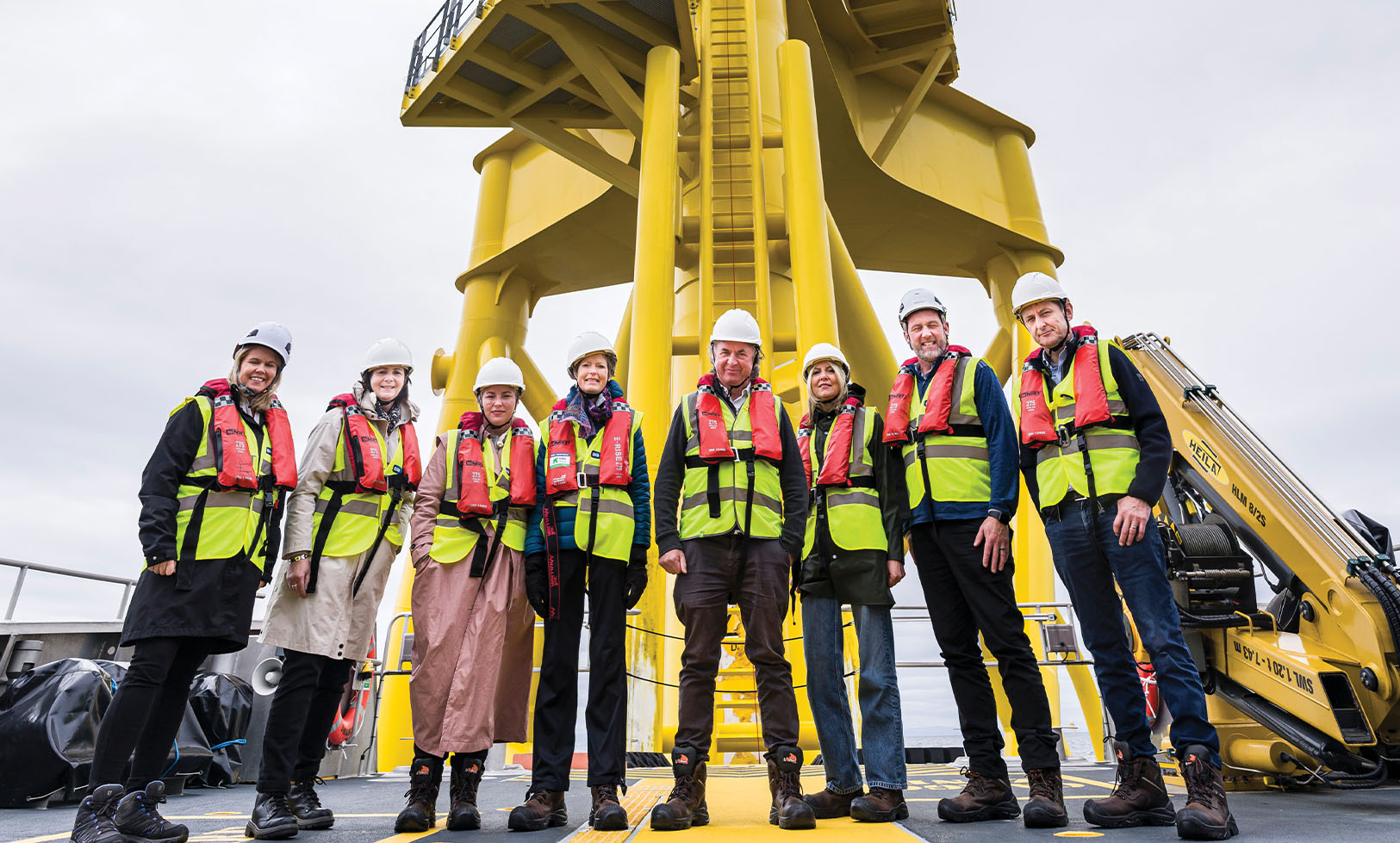
Members of ESB board and executive team at Neart na Gaoithe in 2024.
Riding a new wave in Ireland’s south-east
Building on its offshore experience in Great Britain, ESB has been applying valuable lessons in Ireland. In 2019 the company partnered with Parkwind on the Oriel Offshore Wind Farm off the coast of Louth, which is expected to become Ireland’s first commercial-scale offshore wind farm since Arklow Bank phase one was commissioned in 2004.
A further milestone was achieved in late 2025 when ESB and its joint venture partner Ørsted secured development rights for the Tonn Nua site off Ireland’s south-east coast through the State’s second offshore wind auction under the Offshore Renewable Electricity Support Scheme (ORESS).
Tonn Nua is the first project to progress under Ireland’s new plan-led system. Located off the Waterford coast within the South Coast Designated Maritime Area Plan (DMAP), it will be capable of delivering around 900 MW of renewable energy, enough to power almost one million homes and save up to 1.8 million tonnes of carbon emissions annually. The project will connect to the national grid through offshore cables and onshore substations, with EirGrid responsible for delivering the offshore and onshore transmission infrastructure.
“We are at an early stage of the project and our immediate focus is on developing a thorough understanding of the site,” says Moira Walsh, Project Director for Tonn Nua.
“Surveys will provide information needed to inform engineering design and turbine layout, as well as important environmental data on birds, marine life, and seabed habitats to inform our impact assessments. Throughout this work and beyond, we will continue to engage openly with coastal communities, fisheries, and other sea users as the project develops.”
Subject to factors such as planning consent, grid connection, and delivery of enabling infrastructure, the project is targeting operation by 2034.
Partnering with local communities
Collaboration with coastal communities is vital along this journey, and ESB’s experience in the UK has shown how offshore development can benefit local areas. Neart na Gaoithe, for example, has contributed around £200 million to the economy through local supply chains, and its operations and maintenance base has provided 50 high quality jobs for ongoing management.
In Ireland’s south-east, Tonn Nua will support the development of a regional offshore wind industry, creating opportunities for ports, local businesses, supply chain companies, and skills development. The project is also expected to provide a community benefit fund of about €120 million over 20 years to support local initiatives.
Navigating challenges
As with any infrastructure project of this scale, challenges can arise around planning and consenting, connecting the wind farm to the wider electricity grid, or port infrastructure – with investment needed to ensure Ireland’s ports can handle turbine components, heavy lifting operations, storage, assembly, and ongoing operational work.
Offshore projects can also feel the force of geopolitical headwinds in the form of rising inflation or supply chain crunches.
“Managing cost uncertainty over a lengthy development and construction period is one of the biggest challenges for any offshore wind project around the world,” says Kennedy.
While the ORESS framework largely fixes revenues, delivery costs can be affected by factors like inflation, supply chain pressures, financing costs, and delays.
“Our success is determined by our ability to manage those risks while maintaining affordability.”
Full speed ahead
Despite these challenges, this next wave in Ireland’s energy transition is set to be truly transformative.
“Ireland is fortunate to have this exceptional wind resource just off our shores,” concludes Walsh.
“It is an exciting moment for everyone working in the sector. By working together across industry, government, and communities, we can turn that potential into a lasting source of clean, secure energy, and long-term value for generations to come.”
W: www.esb.ie