

Helping Irish SMEs become more sustainable
14th October 2026
The next wave of Ireland’s energy transition
14th October 2026Accelerating the European transition to net zero

Catherine Vilquin, president of the European Council of Spatial Planners – Conseil européen des urbanistes (ECTP-CEU) – outlines that all EU member states and partner states are experiencing increasing pressure on soil, with about 1.26 million hectares of land converted to urban use between 2000 and 2018.
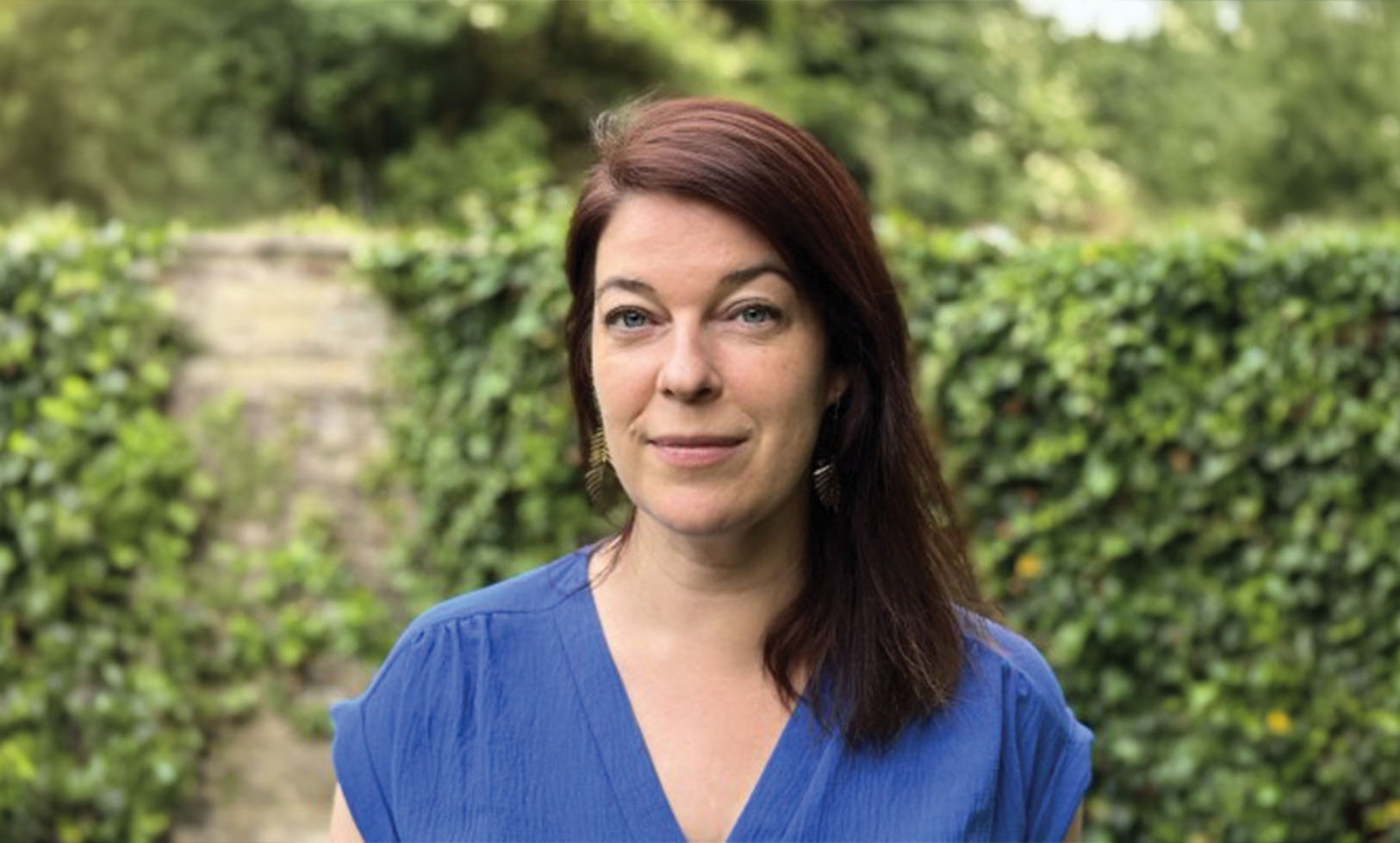
Vilquin explains that the role of spatial planners has expanded in recent years. She defines its purpose as: “Working for the common good of all living forms while ensuring climate and social justice, and delivering positive environmental impact.”
She traces how the aim of spatial planning has evolved, stating that it was formerly about reducing the negative environmental impact of projects and that it is now about delivering a positive environmental impact when delivering projects.
Vilquin says spatial planning is taking a regenerative design approach, adding: “This is going above sustainability. It is aimed at delivering positive environmental impacts, not just breaking even.”
Spatial planners are also focusing on reducing land take and land consumption with a goal of no net land take by 2050. Vilquin states that this is a “very short period of time”. She also explains that production in cities must transition from linear to circular.
Along with considering the environmental implications of projects, she says it is important to consider how nature interfaces with society. She says: “We focus too much on creating nature spaces in cities because it delivers ecosystemic benefits, we also need to provide nature spaces with the aim of benefitting nature itself.
“Nature has a cultural value for citizens. Studies also show that access to nature is crucial for citizens’ mental health.”
Vilquin outlines that the 3/30/300 rule can enable this access to nature. The rule stipulates that each citizen be able to see three trees from their home, that each neighbourhood have 30 per cent tree canopy coverage, and that each citizen’s home be within 300 metres of a green space.
She outlines the multiple responsibilities spatial planners have including regeneration of nature, recycling of materials, and redevelopment of brownfield sites amongst others. Additionally, spatial planners are responsible for enabling co-living, co-ownership, and co-decision-making.
“If projects we are assigned do not fit these criteria, we should not do it and we should not promote it. In such cases, we should work to convince the private developer or public bodies that they need to alter their approach,” says Vilquin.
Vilquin indicates that environmental policymaking should extend beyond the boundaries of urban areas, for example to the scale of a catchment area. She presents a map of the Vesdre Valley in east Belgium which was flooded in 2021. Over 15 per cent of the residential building stock in the area was affected.
Vilquin presents the strategic plan being devised for the area’s reconstruction. It was determined that management of agricultural land and forests would have to be approached differently to protect the area against future flood risk.
The spatial planner states that she views cities as living organisms. She says cities’ soils, water, and greenery must be healthy to ensure citizens live in positive environments. Vilquin adds that failing to ensure cities remain healthy leads to destruction similar to what was seen in Vesdre Valley in 2021.
Providing examples of best practice in ensuring healthy cities, she identifies Reims in France as a model for rainwater absorption. The city has been desealing land to maximise the volume of water infiltrating the ground for collection and reuse.
She points to Liège in Belgium as an example of a city managing greenery effectively. Liège has identified the tree coverage per neighbourhood and areas where the most heat island effect is observed. It has developed a strategic plan identifying how trees should be replanted.
No net land take
Outlining the negative impact of land take and its resulting soil sealing, Vilquin says it leads to a loss of biodiversity and fragmentation of habitats and can affect agriculture and forestry.
It also leads to the consumption of a non-renewable resource in soil and exacerbates vulnerabilities of territories such as increased heat island effects and floods. Additionally, urban sprawl results in increased demand for transport, and thus energy.
“It is very clear that it is important to stop urban sprawl and land consumption,” says Vilquin.
She explains that this means cities must be made more compact and dense. The spatial planner indicates that no net land take strategies will need to be developed in each EU member states and that they will differ between regions due to differences between economies, demographics, and characteristics of the physical territory.
Vilquin says planners must begin rejecting applications that move in contrary to the 2050 goal. She says: “This is how we stop urban sprawl and readjust urbanisation. It will take time to convince politicians, citizens, and private owners of the benefits.”
Concluding, she says: “We must work together and make a strategic plan for the coming 25 years. This is the challenge we are now facing and that every country in Europe should address because 2050 is tomorrow.”