
Beyond 3GW: Ireland’s Solar+ opportunity
13th October 2026
How AI can transform the UK’s electricity grid
13th October 2026Why fleet electrification could transform Ireland’s EV transition
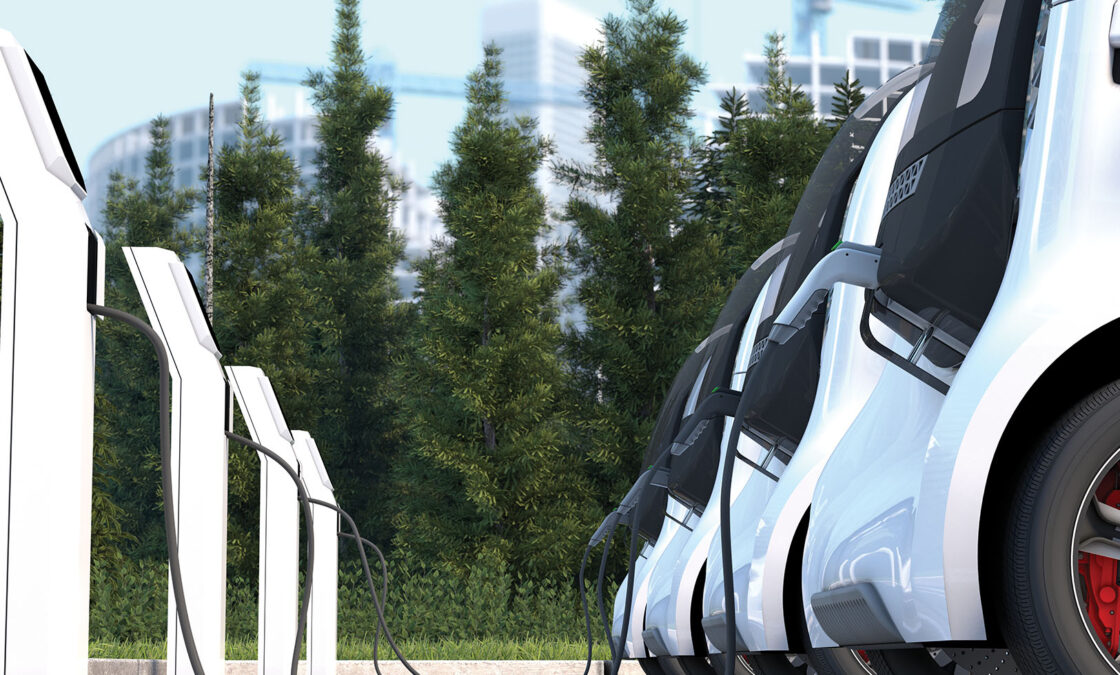
Commercial fleets produce a disproportionate share of transport emissions, but their high mileage also makes them prime candidates for electrification, writes David Cashman, Consulting Partner at EY.

The prize is lower operating costs and faster decarbonisation, provided Ireland can align incentives, charging infrastructure, and grid capacity.
Ireland’s progress towards its transport decarbonisation targets could be significantly accelerated through greater adoption of electric vehicles (EVs) by commercial fleets. While fleets represent a relatively small share of vehicles on Irish roads, they account for a disproportionate share of kilometres travelled and transport emissions.
Commercial vans and heavy-duty vehicles (HDVs) make up just 14 per cent of vehicle stock yet generate more than half of road transport emissions. The emissions opportunity is significant, but according to the EY-Eurelectric report, Fleet forward: powering the transition to electric mobility, the economic opportunity may be even greater.
Why fleet electrification matters now
Fleet electrification is approaching an inflection point across Europe. The Fleet Forward report finds that economics, rather than environmental ambition alone, will determine the pace of adoption. Based on expected uptake rates, electrification of Europe’s fleet vehicles could generate up to €246 billion in operating-cost savings by 2030.
For fleet operators, the economics are becoming increasingly attractive. Electric vehicles can significantly reduce energy, servicing, and maintenance costs, particularly for high-mileage fleets where operating expenditure accounts for a substantial share of total ownership costs. Against a backdrop of fuel price volatility, the business case for electrification continues to strengthen.
The environmental benefits are equally compelling. The report estimates that full fleet electrification could avoid up to one billion tonnes of CO2 emissions by 2030, equivalent to approximately 5 per cent of projected EU and UK emissions over the same period.
The benefits extend beyond fleet owners. Electrified fleets can provide flexible electricity demand to support grid stability and renewable integration, while creating growth opportunities for charge point operators, leasing companies, energy providers, and investors.
Time to clear the path for EV adoption
Despite these benefits, progress has been slower among commercial fleets. Key barriers include higher upfront costs, uncertainty around residual values, grid connection delays, and the availability of charging infrastructure.
Experience across Europe demonstrates that policy certainty matters. In the Netherlands, a combination of zero-emission zones and fiscal measures helped electric vans reach 44 per cent of new light commercial vehicle sales.
Belgium has accelerated company car electrification through favourable tax treatment, while reforms in France strengthened the economic incentive to switch. The UK has similarly demonstrated how predictable benefit-in-kind policies can accelerate company car adoption.
The common lesson is that fleet electrification accelerates when businesses can see a clear and predictable economic pathway. However, the report also identifies persistent barriers, including fragmented incentives, high upfront costs, and higher public charging costs relative to private charging. Grid reinforcement and charging infrastructure deployment remain challenges across many markets, including Ireland.
Like many European countries, Ireland faces a chicken and egg challenge. Fleet operators are reluctant to invest without visible and reliable charging infrastructure, while infrastructure providers require stronger demand signals before committing capital. This makes smart charging, flexible connections, and demand-side flexibility increasingly important enablers of fleet electrification.
Turning ambition into action
The Fleet Forward report argues that many of the solutions to large-scale electrification are already well understood. The challenge is no longer identifying solutions, but deploying them at scale. For Ireland, this means combining targeted incentives, supportive regulation, charging infrastructure investment, and innovative financing models to create a compelling business case for fleet operators.
Reducing upfront cost barriers remains a priority. While operating costs are increasingly favourable, higher acquisition costs continue to deter many businesses, particularly SMEs. Measures that narrow the upfront cost gap between electric and diesel vehicles can accelerate fleet replacement decisions and improve investment confidence.
The report also highlights the need for charging hubs along major transport corridors, integrated energy and fleet-management platforms, demand flexibility services, and more flexible approaches to grid connections. Emerging commercial models such as ‘charging as a service’ and ‘fleet as a service’ can help businesses electrify without significant upfront capital investment.
Ireland’s EV Infrastructure Strategy supports many of these priorities, including depot and enroute charging for commercial fleets, high-power charging along key transport corridors, and the rollout of smart, interoperable charging infrastructure.
The National Road Network EV Charging Plan 2024-2030 complements this by providing a roadmap for charging deployment and recognising the role of public investment in accelerating delivery and providing certainty for fleet operators. At a European level, the European Commission’s proposed Regulation on Clean Corporate Vehicles could further strengthen investment confidence by introducing binding national targets for zero- and low-emission cars and vans newly registered by large companies from 2030.
Summary
Ultimately, the success of fleet electrification will depend on whether every participant in the ecosystem can see clear value. For fleet operators, that means lower operating costs and improved returns. For charging providers, investors, and energy companies, it means predictable demand and the confidence to invest in new infrastructure and services.
For Ireland, the opportunity is not simply to replace diesel vehicles with electric alternatives. It is to build an integrated transport and energy system in which vehicles, charging infrastructure, and electricity networks work together. If policy certainty, infrastructure delivery, and innovative financing can be aligned, fleet electrification could become one of the most important and most commercially compelling routes to reducing transport emissions.