

How AI can transform the UK’s electricity grid
13th October 2026
Preparing the foundations for a low-carbon power system
13th October 2026North falling short of renewables targets
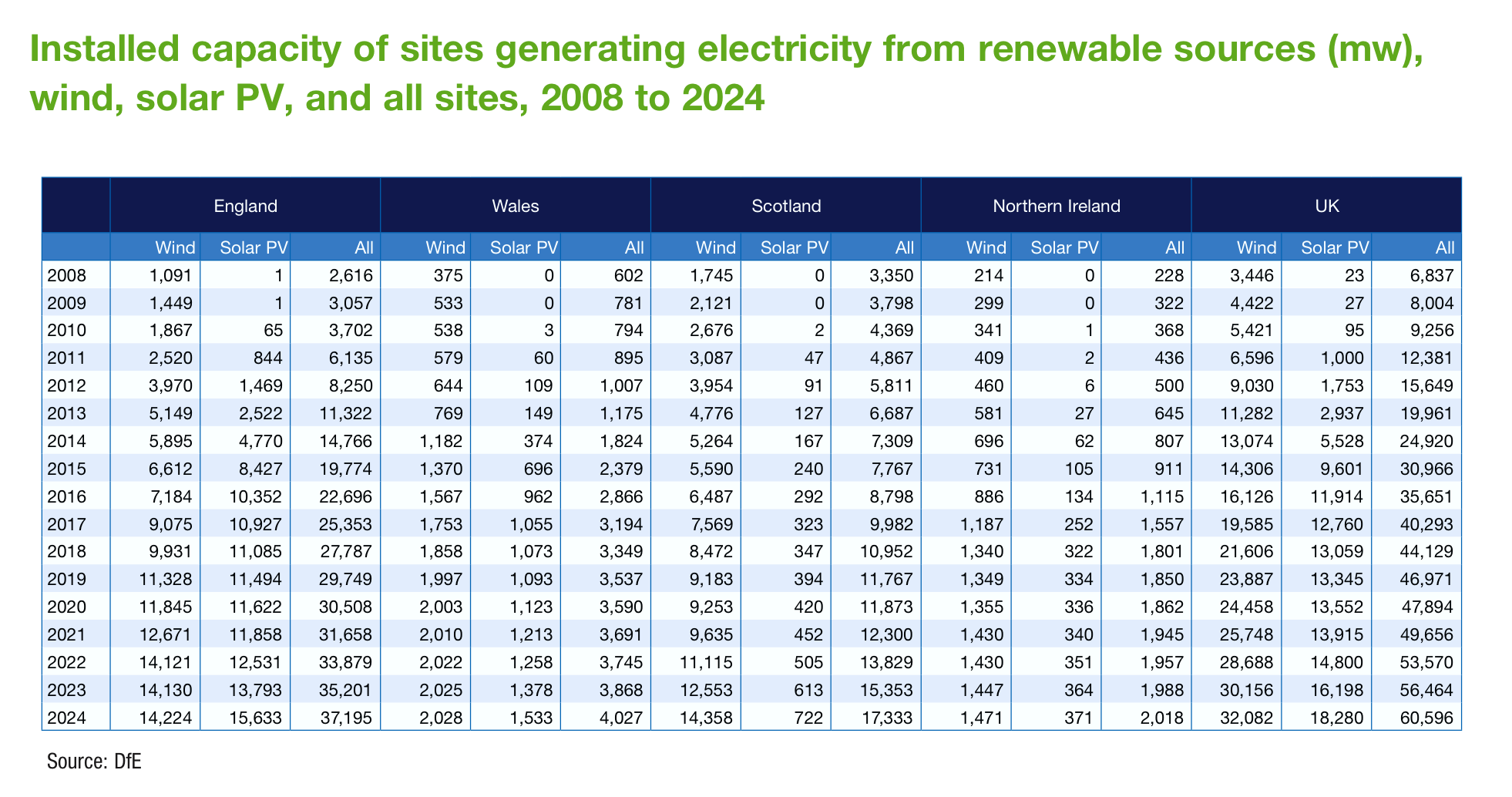
Renewable electricity generated in the North was equivalent to 50 per cent of gross final electricity consumption in the 12 months to June 2026, up from 44 per cent a year earlier. However, reaching the statutory target of at least 80 per cent by 2030 will require significant development across almost every part of the energy system.
The Climate Change Act (Northern Ireland) 2022 requires the Department for the Economy (DfE) to ensure that at least 80 per cent of electricity consumption in the North comes from renewable sources by 2030, replacing the 70 per cent target established in the 2021 Energy Strategy: Path to Net Zero Energy. The Act also places the region on a statutory pathway towards net zero greenhouse gas emissions by 2050.
The Energy Strategy remains the central policy framework for the energy transition, with annual action plans setting out measures to deliver its objectives. More recently, DfE has moved towards implementation, including developing a Renewable Electricity Support Scheme, planning for smart meters and grid flexibility, and developing support for low-carbon heat.
The Department’s 2025 Action Plan described this as a shift towards delivery of the 2030 targets, while the 2026 policy programme continues to focus on translating the legislative ambition into projects and infrastructure.
Northern Ireland Statistics and Research Agency (NISRA) figures show that renewable generation was equivalent to 50 per cent of gross final electricity consumption in the year to June 2026, leaving a substantial gap to the statutory 2030 target.
Onshore wind
Onshore wind remains the backbone of the North’s renewable electricity system.
In the 12 months to June 2026, wind accounted for 74 per cent of all renewable generation, with renewable generation reaching 4,431GWh. Wind has generated more electricity than all other renewable technologies combined throughout the period covered by the current NISRA series.
The North closed its Renewables Obligation to new onshore wind projects in 2016. Since then, developers have operated without a dedicated renewable electricity support mechanism. DfE’s Renewable Electricity Price Guarantee (REPG) is intended to change this, with the final scheme design published in September 2025. The Renewable Electricity Generation Bill subsequently provided the legislative framework for competitive renewable electricity auctions.
The Department’s Energy Strategy Action Plan 2026 identifies delivery of the support scheme as a central part of the route towards the 2030 target. Renewable NI has argued that the combination of the support scheme and improvements to grid infrastructure will be critical to unlocking the existing development pipeline.
Grid access is already a significant challenge. The Utility Regulator has highlighted the level of dispatch-down experienced by renewable generators because electricity cannot always be transmitted where it is required. It is reviewing the way firm access is allocated, while reforms to connection costs came into effect in May 2026, increasing the socialisation of electricity distribution reinforcement costs.
Offshore wind
Offshore wind represents perhaps the biggest opportunity for diversification, but it is also the technology furthest from commercial deployment.
The North currently has no operational offshore wind farms. DfE’s Offshore Renewable Energy Action Plan is intended to enable offshore energy deployment in the North’s marine area from 2030, with work focused on identifying appropriate locations, environmental considerations, leasing arrangements, and the supporting infrastructure.
The Department has also been developing the policy framework for offshore renewable energy installations, including issues such as decommissioning, safety zones, and navigational rights.
The development of Belfast Harbour is an important part of the wider opportunity. Developers have committed significant investment towards establishing Belfast as an offshore wind hub, while the harbour is developing additional deep-water infrastructure.
The UK’s Clean Energy Industries Sector Plan has identified the North’s offshore wind opportunity alongside its ports, fabrication capacity, and potential role in supporting wider UK and island-of-Ireland offshore deployment.
Offshore wind is unlikely to make a substantial contribution to Northern Ireland’s 2030 electricity mix, meaning onshore deployment will continue to carry much of the burden in the intervening years and any significant advance towards the overall 2030 targets remains unlikely.
Biomethane
Biomethane is moving into a more advanced phase of policy development. The first injection of biomethane into the North’s gas network took place at Dungannon in November 2023. Since then, DfE has undertaken work to determine the costs of local production and the policy mechanisms required to establish a viable industry. A call for evidence was undertaken in 2024, with the resulting report helping to shape current policy development.
The gas network operators have identified considerable potential. A 2024 request for information received responses from 84 prospective producers representing around 3.6TWh of potential annual production. The most advanced projects were assessed as having plausible deployment of approximately 1.6TWh per year by 2030, compared with the Executive’s target of 1.5TWh of annual network injection.
There has also been regulatory progress. The Utility Regulator approved modifications to gas conveyance licences in March 2026 to facilitate renewable gas connections, with the changes taking effect in May 2026.
DfE is now working on support mechanisms, connection costs, and certification standards. At the September 2026 Northern Ireland Energy Forum, Economy Minister Caoimhe Archibald MLA said a biomethane policy consultation was expected the following month, jointly developed with DAERA.
Green hydrogen
DfE published its hydrogen policy consultation in 2025, covering production, storage, transport, and use. A response was published in May 2026, providing the basis for further policy development. The Department sees low-carbon hydrogen as potentially important for industry, power, energy security, and system flexibility.
Encouragingly, Energia has operated a 1MW electrolyser at Long Mountain in County Antrim, co-located with wind turbines, while NI Water has been developing a hydrogen and oxygen demonstrator with £5 million of DfE capital funding.
B9 Energy is also developing a proposed 20MW Power-to-X pilot, intended to use curtailed renewable electricity to produce green hydrogen and methanol while demonstrating flexible operation alongside the electricity grid, demonstrating the potential of hydrogen of absorbing surplus renewable generation.
A further demonstration at Ballylumford, County Down, has received UK Government funding to develop a 20MW membrane-free electrolyser using curtailed wind power, with hydrogen storage in local underground salt caverns.
Heat networks and district heating
Heat is perhaps the least developed part of the North’s energy transition. The latest DfE/NISRA household survey shows that 63 per cent of households used oil as their primary heating source in 2025/26, while 34 per cent used gas.
Heat networks therefore have considerable potential, particularly where they can utilise waste heat, geothermal resources, or renewable electricity. However, the sector remains small.
DfE’s latest consultation identifies 97 notified heat networks in the North, comprising 90 communal systems and just seven district heating networks. Around 3,000 consumers are currently served.
The immediate priority is regulatory rather than construction. DfE launched a consultation in August 2026 on a locally led regulatory framework, including a proposed role for the Utility Regulator and an authorisation regime for operators. Existing UK-wide metering and billing regulations are expected to be revoked in 2027.
The Executive is also developing a broader framework for low-carbon heat. At the Northern Ireland Energy Forum, Minister Archibald said the Department would consult on a new energy-efficiency and low-carbon heat support scheme for homes, alongside work on heat networks and geothermal energy.