
Irish Bioenergy Association
23rd March 2026Accelerating a Just Transition: Why LPG and renewable liquid gases hold the key to rural decarbonisation
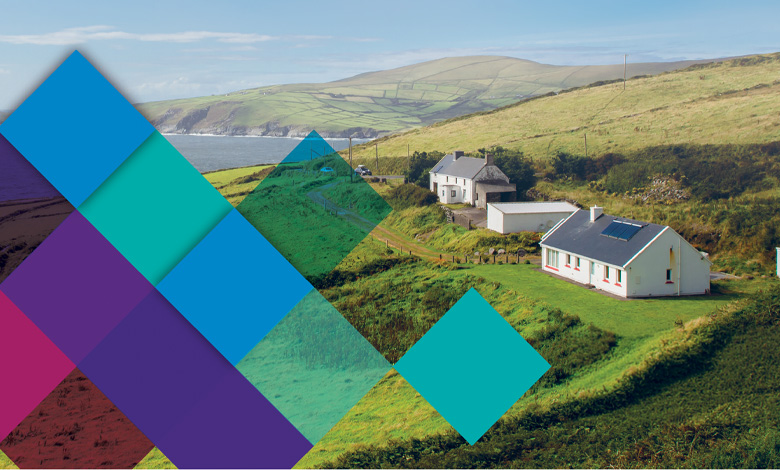
The liquid gas sector continues to play a pivotal role in supporting the energy needs of Ireland’s rural communities. These areas face unique challenges: homes tend to be older, larger, and more likely to experience energy poverty. Renovation pathways are often complex and costly. The majority of households outside Dublin, Cork City and Galway City still rely on high carbon oil, peat, or coal for heating. Critically, most of these homes are off the natural gas grid, where switching to heat pumps is often logistically unfeasible or prohibitively expensive.
The SEAI’s National Heat Study reinforces these findings. While heat pumps work well in many settings, nearly a fifth of homes would remain unsuitable even with all practical energy efficiency upgrades. Relying on electrification alone would leave large segments of rural Ireland behind. A balanced approach that combines electrification with renewable liquid gases is essential to deliver a fair and achievable pathway to net zero.
For these communities, the question is not whether to decarbonise, but how. LPG and renewable liquid gases provide a pragmatic answer. Switching from oil to LPG immediately delivers significant emissions savings, while BioLPG – already available in Ireland today – offers a renewable alternative that can be seamlessly integrated into existing systems. Chemically identical to LPG, BioLPG can be ‘dropped in’ to existing LPG boilers and appliances without costly retrofits. It can also be blended with LPG, enabling a phased transition to 100% renewable supply in line with the upcoming Renewable Heat Obligation.
Liquid gas is not just a stopgap; it is a cornerstone of a mixed technology approach. LPG and BioLPG can work alongside other renewable technologies, including hybrid heat pump systems, to deliver meaningful progress in decarbonising rural homes and businesses. This flexibility is vital in areas where full electrification is technically challenging or economically prohibitive. Government policy must reflect this reality. To deliver a truly ‘Just Transition’, supports must ensure parity between on grid and off grid consumers. Grants and incentives should be structured to assist with the additional costs of transitioning to renewable fuels like BioLPG, ensuring rural households are not disproportionately burdened.
Ireland’s pathway to net zero must be inclusive, technology neutral, and equitable. That principle underpins Delivering Net Zero for Rural Ireland – Pathways to Renewable Liquid Gas, a new report published by Liquid Gas Ireland (LGI). The report demonstrates that renewable liquid gases offer a scalable, cost effective solution for decarbonising homes, businesses, and industries beyond the natural gas grid.
Ireland’s decarbonisation policy must not create a divide where urban, gas grid connected consumers enjoy robust supports while rural communities face higher costs and fewer options. Renewable liquid gases meet the core principles of a ‘Just Transition’. They are accessible, flexible, compatible with existing systems, and can be deployed quickly. Grants, incentives, and retrofit schemes must be available to rural households and businesses to ensure that communities reliant on oil, coal, and peat are not left behind.
Our research shows Ireland could produce over 100,000 tonnes of renewable liquid gas annually by 2050, meeting more than 60% of current demand. This would enhance energy sovereignty, create rural jobs, and align with national waste, agriculture, and renewable energy strategies. There are multiple pathways to developing this domestic supply, including co-production from biomethane anaerobic digestion (AD) plants, producing BioLPG as a by-product of hydrotreated vegetable oil (HVO) and sustainable aviation fuel (SAF) production, and purpose-built facilities using advanced gasification technologies. Ireland’s access to an integrated European renewable liquid gas market will complement domestic production, ensuring security of supply during the transition.
The transition to renewable liquid gases is not optional; it is essential. The sector’s readiness, combined with clear production pathways and the ability to deliver rapid emissions cuts, positions renewable liquid gas as a strategic enabler of rural decarbonisation. By embedding renewable liquid gases into the core of Ireland’s energy strategy, policymakers can ensure that every household and business, regardless of location, benefits from a clean energy future.
For more information on the role of LPG and BioLPG in supporting the decarbonisation of rural off natural gas grid homes and businesses, visit www.lgi.ie