Sustainability must be embedded in infrastructure development
13th October 2026
How geopolitics is shaping our energy future
13th October 2026Building on success
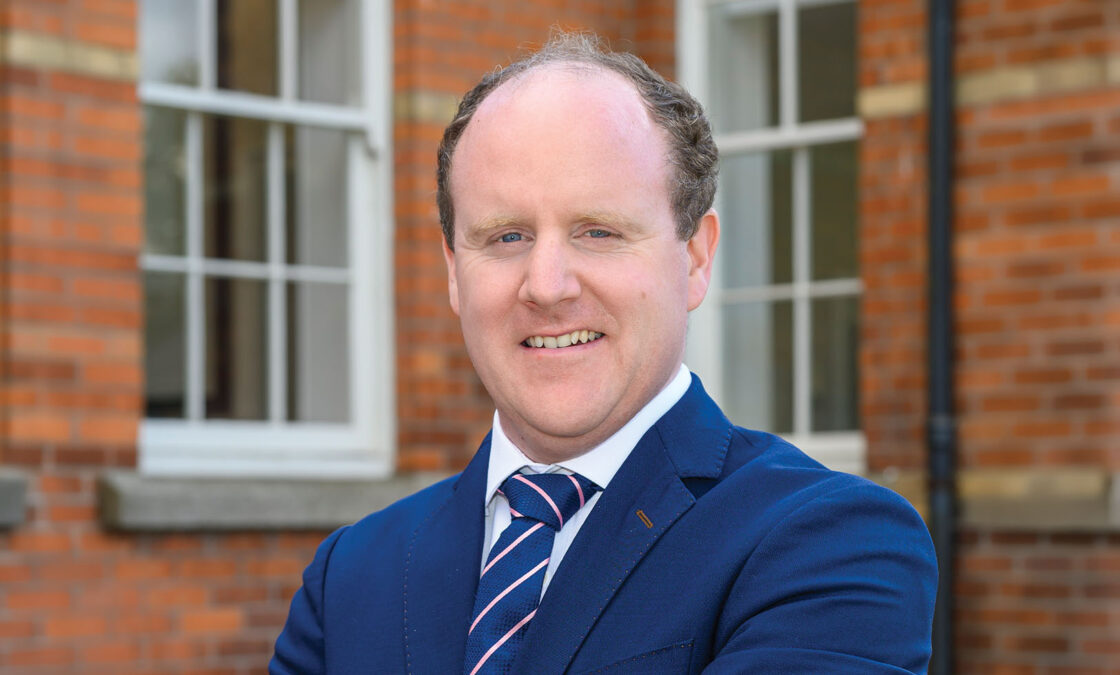
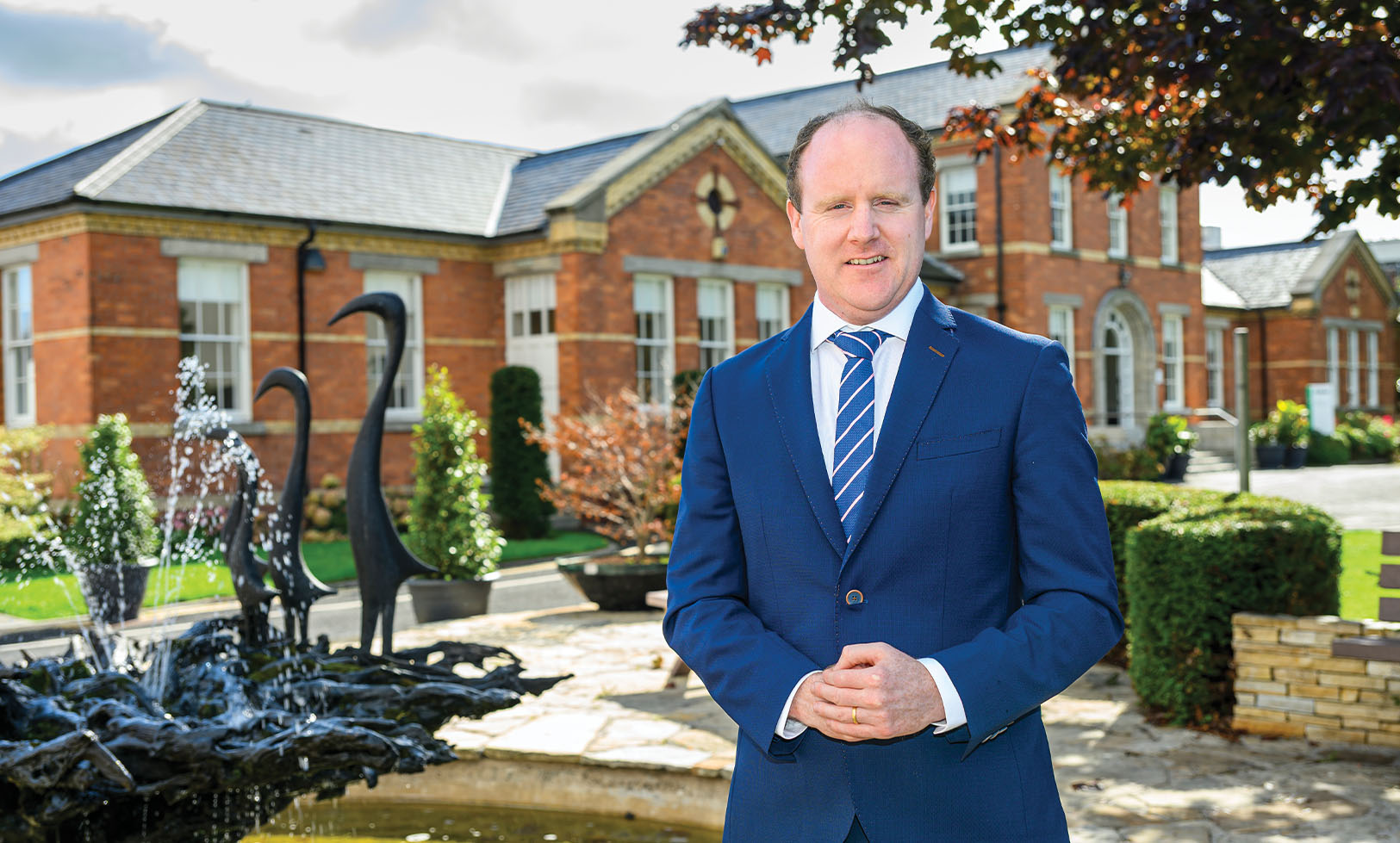
Brendan Kelly, Head of Commercial at BnM, talks to Owen McQuade about the growing importance of electrification to the Irish economy, BnM’s 1GW of operational renewable energy projects, and its plans to develop a further 6.5GW of generation to support this need.
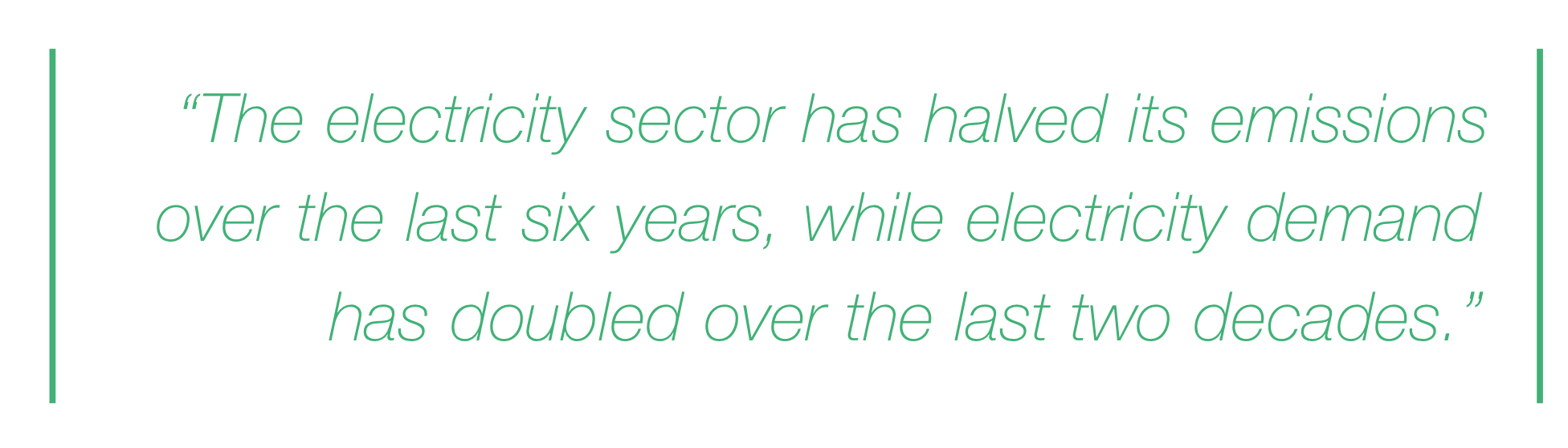
The challenges facing the electricity sector, including planning and grid connections, are well documented. However, focusing on the significant progress the sector has made over the past three decades, Brendan Kelly says: “When you look across other sectors of the Irish economy, such as transport, agriculture, and heating, electricity is very much leading the way.
“There are certainly challenges for the sector, such as accommodating and efficiently connecting new generation and demand, but the reality is that the electricity sector has halved its emissions over the last decade, while electricity demand has doubled over the last two decades. That is a phenomenal achievement when compared to other sectors of the economy.”
Kelly acknowledges that the sector has had some challenges recently in terms of the pace of connection of new renewable projects but expects activity to pick up pace. He highlights recent planning changes, including the shortening of the judicial review process and the enactment of Block C of the Planning and Development Act 2024.
“This will significantly help infrastructure development in Ireland. In the past six months, we have received three very significant decisions for our own projects, some of which have been in the system for two years and are now being cleared. We are now seeing progress on the planning front.”
Turning to the grid, Kelly says that it will take EirGrid and ESB Networks several years to deliver the capital investment planned under PR6 (Price Review 6).
“That is understandable, as it will take some time to ramp up to the scale of delivery, which is north of €18 billion over the five-year period. We will likely not see the full fruits of that investment into the 2030s, but there is now momentum building towards the level of infrastructure delivery required.”
“From a BnM perspective, certainty on grid development is really important when we think about delivering our renewable pipeline. This is the overriding factor in terms of how fast we can deliver that.
“Where we can, BnM can support the delivery of energy infrastructure and supporting infrastructure, such as grid connections, on our landbank. Our 80,000 hectare landbank, much of which is interconnected in nature, and ultimately owned by the State, can provide huge benefits in terms of the delivery of infrastructure. We also open up our landbank to public good activities such as new cycling networks, walkways, and other amenities. A great example of this is our Mountlucas wind farm, which attracts thousands of visitors and school groups each year.
“Together with ESB, we have also just opened a new, multi-million euro visitor centre with a sensory garden at Oweninny Wind Farm in north Mayo.”
BnM’s approach is to use its landbank strategically, combining renewable energy and enabling infrastructure with peatland restoration, biodiversity enhancement, and community amenities. Kelly says this allows the company to support both the decarbonisation of Ireland’s energy system and the long-term restoration of former industrial lands.
“Earlier this year, we reviewed our overall land bank and increased our pipeline by 1GW to a total of 7.5GW. That 7.5GW includes 1GW in operation and an additional prospective 6.5GW that could ultimately be delivered in time, if and when the grid is delivered to meet it.
“The projects span a range of technologies, including wind, solar, additional thermal generation, and battery storage” Kelly says.
Storage will also play a role in supporting the future energy system. BnM has recently submitted a planning application for what would be its first long-duration energy storage (LDES) battery, at its Derrinlough Wind Farm site in County Offaly.
“That is an eight-hour 75MW battery storage project. We now have about two years of operational experience with a three-hour battery at Cloncreen, and we see the growing need for batteries with a longer duration to support the rollout of renewables in Ireland.”
Energy Park
BnM has been at the forefront of the Energy Park concept for some time, which sensibly involves co-locating a combination of generation technologies, including wind, solar and battery storage, with large industrial demand.
At its M6 Energy Park in County Offaly, BnM secured planning permission this summer for the 710MW Derrygreenagh Power project and associated 400kV grid infrastructure. The project comprises a 570MW combined cycle gas turbine (CCGT) and a 140MW open cycle gas turbine (OCGT).
Having secured planning consent, BnM hopes to move the project into its next phase of development.
“The overall project is being built in response to this very clear need: to connect a mix of renewable and firm power technologies to meet grid demands at any time of day or year. This is about helping to maintain security of electricity supply in the first instance, but it will also help Ireland transition to a low-carbon economy in line with Climate Action Plan objectives.”
BnM’s wider Energy Park model is designed to unlock the value of its landbank and energy infrastructure by creating strategically located sites that can support future industrial development in the Midlands.
Deploying renewables at scale
“The evolution of technology has also had a significant impact on the energy system. The cost reductions in energy technologies over the past 20 years have been phenomenal, with the cost of solar panels and batteries falling dramatically to the point where they are now being deployed at scale,” Kelly says.
It is now common for many homes to have solar panels and batteries. An electric vehicle in Ireland is currently four-six times cheaper to run than an internal combustion engine vehicle. “It is not a question of if we will see the end of the internal combustion engine, but when we will see it.”
These trends are increasing the importance of the electricity industry and form part of a wider move towards the electrification of transport and heating. Coupled with growing electricity demand from ICT and other sectors, this has increased reliance on the electricity sector to power a modern economy.
This is reflected in the Government’s next energy white paper, due to be published in 2027 which will focus on electricity, as opposed to the whole energy system.
BnM is already playing a significant role in powering the electricity sector and continues to add to its 1GW portfolio with a number of projects under development and construction.
One notable example is the third phase of Oweninny Wind Farm, which will comprise 18 turbines with a projected output of approximately 100MW, adding to what is already Ireland’s largest onshore wind farm. Kelly again highlights how technological development has shaped the project.
The neighbouring Bellacorick Wind Farm, Ireland’s first commercial wind farm, was decommissioned earlier this year following the removal of its 21 turbines. BnM estimates that just one of the 18 turbines planned for Oweninny Phase 3 could generate as much energy as all 21 of the Bellacorick turbines combined.
Although the new turbines are structurally similar to the original turbines, their tip height has increased from 80 metres to 200 metres. When completed, the Oweninny complex will produce one billion units of electricity each year, equivalent to around 3 per cent of Ireland’s overall electricity demand and 11 per cent of residential demand.
As part of the project, BnM sought to de-risk the grid connection by building and energising the substation before constructing the turbines. This was intended to avoid a situation faced by some developers in the past, where turbines were completed but could then wait up to two years for a grid connection.
The substation will be completed in 2027, with the turbines coming online in 2028.
BnM has a further 1,000MW in the planning system, consisting mostly of wind farm developments.
“We have really ramped up our development activities in the past 12 to 18 months and we are hoping that the grid development will match the pace at which these projects come out of the planning system. The biggest project is the 350MW Ballydermot wind farm in Kildare and Offaly, which will go into planning in October 2026,” Kelly says.
BnM deploys a strategic partnership and joint venture approach to its projects where appropriate. One of its key joint ventures is with SSE Renewables, targeting up to 800MW of new onshore wind projects.
Solar projects are being developed in partnership with ESB through a co-development agreement to deliver large-scale solar projects across Offaly and Kildare, utilising BnM’s strategic land bank.
Future
Looking to the future, Kelly sees the Government’s forthcoming white paper as pivotal to the trajectory of the electricity system. He will be closely involved in the consultation process, engaging with government in his role as Chair of the Electricity Association of Ireland.
The Energy White Paper in 2008 effectively signalled the end of coal and peat as generation sources in the Irish energy mix. Kelly believes the next government white paper will be equally important in shaping Ireland’s energy future.
“It is really important for the industry to engage now with the white paper consultation process and to highlight not only all the different challenges, hurdles and bottlenecks, but also the technologies and policies that need to be put in place to get us to 2050.
“From a BnM perspective, we need to deliver our wind, solar, and battery projects over the coming years. We know these technologies well and the challenge now will be to deliver them.
“The electricity sector has reduced its emissions from 12 million tonnes of CO2 to six million tonnes over the last six years. We now need to focus on how we get that down to two million tonnes.
“The questions we then need to ask are how do we get that down from two million tonnes to zero, what is the cost of doing that and is the technology available for it?
“Also would it be better to invest that money in reducing the emissions of other sectors? That is a question we need to ask ourselves in the debate over the next 12 months,” he concludes.