

Northern Ireland’s renewable opportunity
13th October 2026
Building Ireland’s heat future through district heating
13th October 2026Decarbonising Europe’s heating

Luca Neumann, policy manager at Euroheat and Power, highlights the potential of decarbonised district heating and cooling (DHC) to support the EU’s climate targets and improve energy efficiency and flexibility.
Luca Neumann says that the need to decarbonise DHC has grown significantly in light of recent geopolitical events restricting access to fossil fuels, saying: “The current Middle East situation puts it very much in focus that heat decarbonisation is not just a matter of decarbonising, but also of resilience, energy security, and energy independence.”
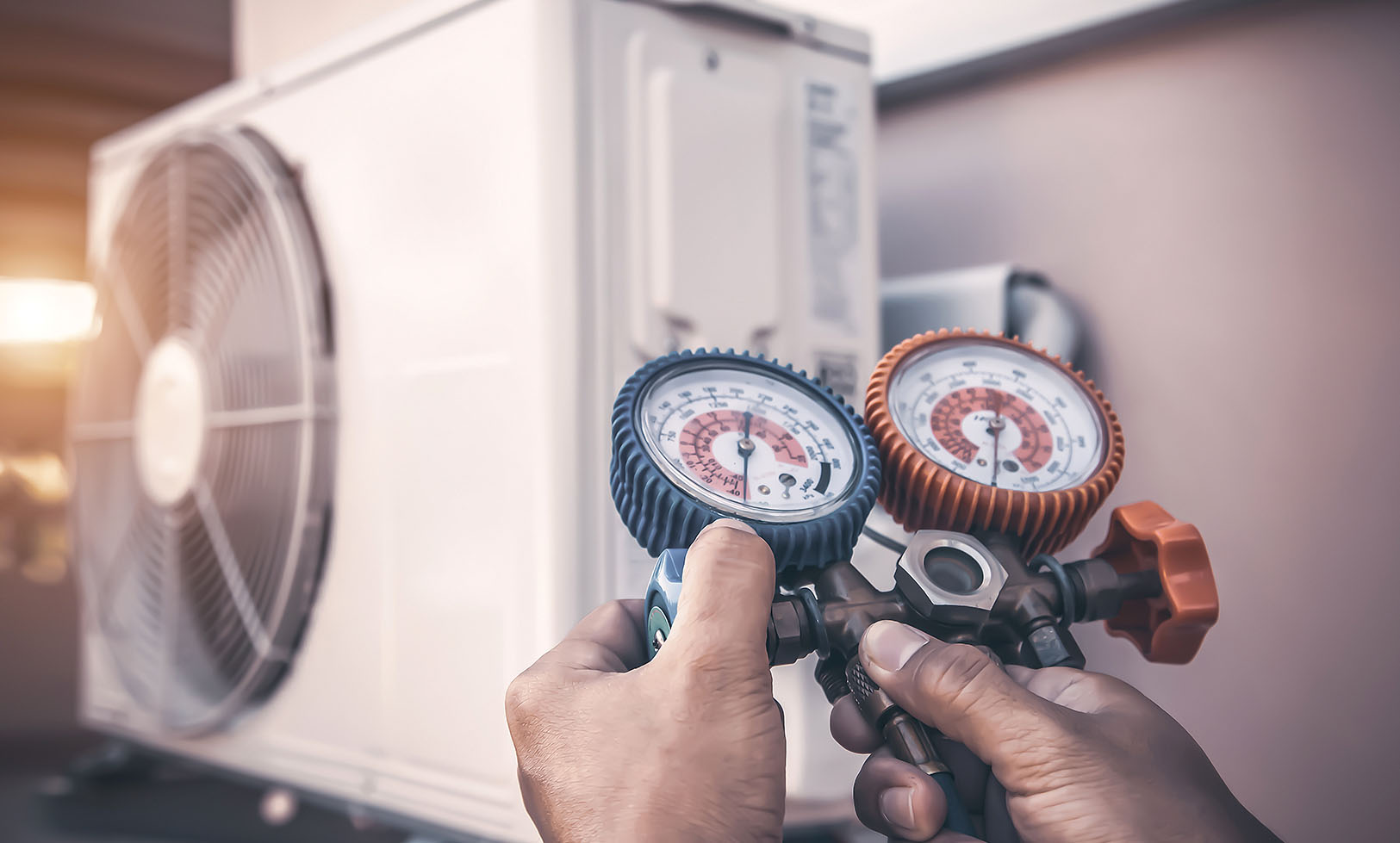
DHC is a centralised energy system that produces thermal energy in one location and distributes it through underground pipes to multiple buildings for heating and cooling.
Neumann says: “What is unique about district heating is that it can integrate a lot of different types of energy sources and technologies.”
He explains that this can include “waste heat from different sectors, we also have the possibility to integrate renewable electricity through power-to-heat solutions and direct renewable energy sources such as geothermal, solar thermal, and bioenergy”.
DHC currently represents around 13 per cent of the EU’s heat market, serving up to 80 million citizens connected through approximately 17,000 DHC networks.
Noting that “two-thirds of all fossil gas consumed in the EU is used to generate heat and cold in buildings and is imported as well”, Neumann says the decarbonisation of DHC could have a significant impact on the EU’s climate targets.
DHC market
Euroheat and Power, the international association for DHC, published its DHC Market Outlook 2026 in June 2026, which highlights the sector’s strong progress in recent years.
Neumann says the report’s main finding was “increased defossilisation and diversification, through increasing integration of low-carbon energy and waste heat”.
In 2024, renewable and waste heat sources accounted for 46.2 per cent of DHC supply, surpassing fossil fuels (45.9 per cent) for the first time.
There was strong growth in the use of all low-carbon energy sources in DHC, with large heat pump and electric boiler usage growing by 6.2 per cent and 26 per cent respectively, while the use of waste heat grew by 5 per cent.
However, there is still much to be done to improve decarbonisation in the sector.
Heating and cooling in the EU lag in decarbonisation compared to electricity, as 26.7 per cent of energy used for heating and cooling is renewable compared to electricity where 48 per cent is renewable.
Neumann says that reducing this disparity is a core priority of his organisation: “What we are trying to do at the EU level is bridge the heating and cooling decarbonisation gap.”
This is an area of weakness in Ireland as only 7.9 per cent of energy used for heating and cooling comes from renewable sources, the lowest of all EU member states, and the only state with a rate below 10 per cent.
Europe’s energy future
Highlighting the potential of decarbonised DHC, Neumann cites a University of Aalborg study which projects Europe’s possible energy system in 2050, where DHC’s share of the EU heat market is 55 per cent.
Referring to this projection, Neumann says: “I think the first very important lesson is that we really have what it takes to go carbon neutral in our heating system.”
Neumann says the key finding is that between 646 and 900 terawatt hours per year (TWh/y) of renewable and waste heat can be cost-efficiently used in district heating, covering a large share (54-73 per cent) of the supply by 2050.
In the projection, the DHC sector will be largely electrified and heat pumps will be the biggest source, accounting for 39 per cent. Waste heat also plays a large role, constituting up to 34 per cent of the energy supply, while geothermal becomes the prime source of renewable energy, comprising 8 per cent of the total.
Neumann says that the projection also shows the potential for DHC in Ireland which has “the third largest potential for data centre waste heat” at 19TWh/y, and that Dublin’s geothermal potential can meet 75 per cent of the city’s heat demand.
Describing how the sector is projected to look in Ireland, Neumann says: “It could be largely electrified but with heat pumps playing a bigger role, about 40 to 60 per cent. Also waste heat could be up to 30 per cent so there is a big potential for that.”
To achieve this projection, the study states €1.16 trillion investment is needed to modernise and deploy DHC by 2050. This is in addition to €2 trillion for building renovations, €30 billion of which would be needed in Ireland.
Highlighting upcoming policy developments such as the EU’s Cooling and Heating Action Plan alongside the revision of the Renewable Energy Directive and the Energy Efficiency Directive, Neumann says DHC “is a sector in transition”.
The strategy will not introduce additional legislation, rather it will support legislation implementation and provide guidance to the sector.
Explaining the strategy, Neumann says: “It will look at the different resources that could be tapped into by DHC but will also make the link to the Electrification Action Plan to see how DHC can work as an integrated energy system from an overall perspective.”
Ultimately, Neumann highlights that for the sector to reach the University of Aalborg’s projection by 2050 it needs EU annual growth of between 6 and 7 per cent.
Noting that there was a 6 per cent annual growth in large markets such as Germany and France between 2019 and 2023 he says: “This is an objective that is within reach. Of course, it does not come without any effort obviously, but this is something that we also address to policymakers. The potential is there, we can address it and it is possible.”