

Irish Bioenergy Association
23rd March 2026
Foreword Caoimhe Archibald MLA
30th March 2026Foreword: Darragh O’Brien TD
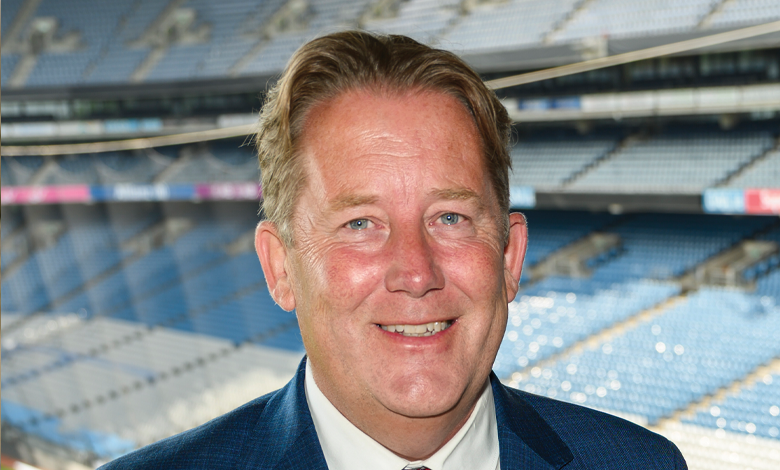
Ireland’s future prosperity and long-term economic growth depends on innovation, talent, trade and also very importantly how we power our economy. Energy is a key contributor to economic growth and how our society functions. Although we face various challenges regarding our energy system, we are making significant progress to address these and to build a much better energy system that is more competitive, affordable, secure and sustainable.
This better energy system is based on electrified heat and transport and renewable generation, and will lead to new opportunities, jobs, improved health and air quality, and reduced waste. We are working collaboratively across Government and the public and private sectors to deliver this energy system and accelerate the energy transition through various policies and measures.
Our energy policy is focused on implementation and delivery, in order to reduce greenhouse gas emissions, increase renewable energy generation, improve energy efficiency, ensure energy security and ultimately enhance our energy resilience.
The Programme for Government and I as Minister for Climate, Energy and the Environment, have recommitted Ireland’s ambition to become climate neutral by 2050, in line with EU ambitions. Furthermore, it is my ambition and the ambition of this government to rapidly expand our renewable energy capacity to meet climate targets and ensure long-term energy security.
This includes scaling up wind, solar, and grid infrastructure, developing interconnections, enabling emerging renewable energy technologies such as biomethane, green hydrogen, geothermal and storage, and streamlining our planning and regulatory processes.
Just before Christmas, the Commission for the Regulation of Utilities published its final determination on Price Review 6 (PR6) covering the period 2026-2030. PR6 paves the way for an historic investment of up to €18.9 billion in Ireland’s energy infrastructure to provide for our growing population and to facilitate investment in our economy.
The PR6 programme will be supported by an unprecedented €3.5 billion government equity investment in our electricity infrastructure, as committed to in the revised National Development Plan. PR6 will strengthen and improve Ireland’s national grid infrastructure, allowing ESB Networks and EirGrid to connect new homes and businesses, reduce curtailment and constraint costs for consumers (thus reducing energy bills) and make Ireland’s electricity grid more resilient to the effects of storms.
Via the introduction of private wires, we are seeking to unlock private sector investment in electricity infrastructure, particularly renewable generation and storage. To accelerate this, the General Scheme for Private Wires was approved by Government and published in December 2025, and it is intended that the Private Wires Bill will be enacted by the end of this year.
Onshore generation is an area in which the Programme for Government reaffirmed Ireland’s targets of 80% of electricity demand to be met by renewables in the near term, with plans to move to net zero by 2050. The five onshore RESS auctions to date have helped to deliver significant new renewables capacity at highly competitive prices, while providing price stability to consumers and a supportive policy environment for investment in our growing renewables sector. My Department will shortly open a consultation on proposed design features of the next onshore RESS auction, RESS 6, with the auction due to take place in the second half of this year. The Department is also working to ensure a policy is put in place to streamline repowering and life extension of existing onshore wind farms that are nearing end of life.
In regard to Offshore generation, following on from the South Coast DMAP, the Department is developing a National DMAP. This will provide a spatial planning policy framework for Offshore Renewable Energy (ORE) around Ireland’s coastline and will aim to designate sufficient maritime area to deliver on Ireland’s ambition to have 20GW of ORE by 2040. During 2026, pre-draft targeted consultations and on-going dialogue with relevant stakeholders will take place with the aim of finalising the National DMAP by quarter four 2027.
Enhanced interconnectivity is essential to achieving Ireland’s renewable energy ambitions, strengthening collective security of supply and delivering significant market, consumer, decarbonisation and grid-resilience benefits. By 2030, it is envisaged that Ireland will have approximately 2.5 GW of electricity interconnection across four cables, including the re-establishment of a direct link to the Internal Energy Market through the Celtic Interconnector to France. During 2026, work on planned interconnector projects will continue alongside exploratory work on additional interconnection with France, Spain and the United Kingdom.
Energy storage is another priority area and one in which further progress will be made via the Electricity Storage Policy Framework for Ireland. This presents Government actions to support the role of electricity storage systems in Ireland’s energy transition.
The National Hydrogen Strategy, published in 2023, sets out our strategic vision for the role that hydrogen will play in Ireland’s energy system and as a key component of our zero-carbon economy. The implementation of the various actions within the strategy will further enable the development of the hydrogen sector in Ireland, removing barriers to early hydrogen project development and laying the groundwork to deliver our long-term strategic vision.
Government has committed to deliver up to 5.7 TWh of indigenously produced biomethane by 2030. The National Biomethane Strategy is guiding action and is an on-going process of collaboration across Government Departments and Agencies. The Renewable Heat Obligation Bill, which secured government support in July 2025 and will be enacted this year will drive demand for biomethane in the heating sector and stimulate domestic production of biomethane.
My Department and the SEAI will continue to support the residential, public and business sectors through the extensive range of resources that improve energy efficiency, reduce carbon emissions, reduce energy consumption and costs in our building stock.
In regard to affordability, the National Energy Affordability Taskforce has been established to identify, assess and implement measures that will enhance energy affordability for households and businesses while delivering key renewable commitments and protecting security of supply and economic stability. The Taskforce will develop and publish an Energy Affordability Action Plan in 2026.
In closing, I wish to impress on you that delivering on these measures and priorities during 2026 and beyond, requires collaboration and represents a momentous opportunity for us all, to help make our economy and industries more efficient and competitive, to open new opportunities for businesses, and to improve our society, lifestyles and the comfort of our homes and buildings.
We are all stakeholders in this transition, and on behalf of the Government and my Department, I look forward to collaborating with you and with many others to embrace the energy transition.
Minister for Climate, Energy and the Environment, Darragh O’Brien TD