
Foreword Caoimhe Archibald MLA
30th March 2026
Energy security and the EU Critical Entities Resilience Directive
30th March 2026Bord Gáis Energy Foreword: Dave Kirwan
‘The difficulty lies not so much in developing new ideas as in escaping from old ones.’
John Maynard Keynes
We have always lived with uncertainty but being human, our instinct is to create the perception of stability, concrete houses, large centralised systems that could operate forever, and so on. However, it all started with the big bang so when we really think about it, change is the only constant, the variable is the pace not the trajectory. So here we are in 2026 (30 years after the first Energy Ireland conference), confronting change at a pace our previous models and theories were not designed to consider. The good news is we are beginning to accept and adjust rather than double down on doing it the same way again. The recent findings of the infrastructure taskforce suggest as much and trading a new paradigm for delivering investment at pace for a status quo of ‘doing our best’ rarely has felt as immediate or as consequential as it does today. The decisions we make, and the actions we take now shape the lives of future generations, that reality defines both the challenge and the opportunity facing the Irish energy sector today.
The transition to a low-carbon energy system is unfolding in real time, against a backdrop of geopolitical tension, volatile markets and rising expectations from customers, communities and policymakers alike. The task before us is not simply to decarbonise, but to do so while maintaining security of supply and ensuring energy remains affordable. Balancing those three imperatives, reliability, affordability and sustainability would be the defining test of any decade, doing so at a pace not attempted before is what sets this decade apart.
At Bord Gáis Energy, we are fundamentally repurposing our business to meet that test. After 50 years delivering energy to Irish customers, we are evolving into a leading green energy company, committed to achieving net zero by 2040 and supporting our customers on their journey to net zero by 2050. This is not a distant ambition; it is being driven by investment, infrastructure and practical action.
Supported by our parent company, Centrica, we have committed €1 billion over five years to Ireland’s energy transition. At the same time, we are continuing to invest in critical national infrastructure, with new flexible generation capacity in Athlone and Dublin progressing towards commissioning in 2026 and preparatory work advancing on a third facility in Galway. These projects are essential to enabling higher levels of renewable generation and maintaining resilience in the electricity system.
We are strengthening our renewable portfolio through long-term partnerships with Irish wind and solar developers, exploring opportunities in hydrogen and storage, and expanding the solutions we offer customers, from smart energy tools to retrofit and on-site generation. Customers increasingly want more than energy supply alone; they want a partner that understands the pressures of rising costs and climate obligations and can help them take control of their energy use.
Yet the scale of the challenge ahead extends far beyond any single company. Delivering Ireland’s energy transition will require unprecedented levels of investment, estimated at €17 billion annually by 2030, with the majority coming from private capital. To attract and sustain that investment, Ireland must offer policy clarity, efficient planning processes and a credible pathway for infrastructure delivery. The Government’s Infrastructure Taskforce Action Plan provides a strong foundation, but urgency in implementation will be decisive.
We also need a mature conversation about the realities of energy pricing and security. Global gas markets continue to shape electricity prices, even as renewables expand. Investment in networks, storage and system resilience carries unavoidable costs. Over time, domestic renewable generation and efficiency will provide the most stable and affordable energy future, but the transition must be managed with transparency and fairness.
Ireland has made remarkable progress in renewable energy, but we cannot afford to treat security of supply and affordability as secondary concerns. The energy transition will succeed only if it is delivered at pace, at scale and in partnership, between Government, industry and communities.
It’s heartening to consider there is now acknowledgement that this transformation is bigger than ones we have delivered before, and this transition will require something more than has gotten us here. It is bigger than any one entity or any single agency, acting in isolation is not an option, we are in an era of collaboration by necessity. With clear policy, sustained investment and collective resolve, Ireland can build an energy system that is secure, competitive and genuinely sustainable, energising a greener, fairer future for generations to come.
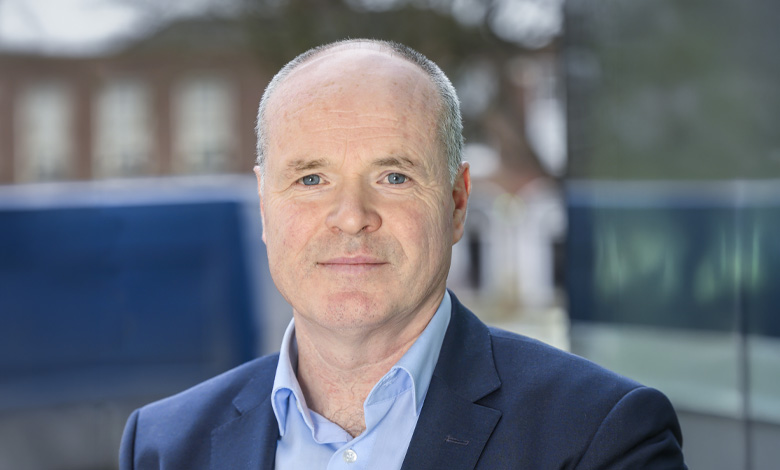
Dave Kirwan
Country Chair of Bord Gáis Energy and Managing Director of Centrica Power