

Ireland’s new Large Energy Users (LEUs) connection policy: What it means for the Irish energy sector
24th March 2026
Designing Ireland’s electricity system for the next phase of solar growth
24th March 2026Transformers for the next phase of renewable energy integration
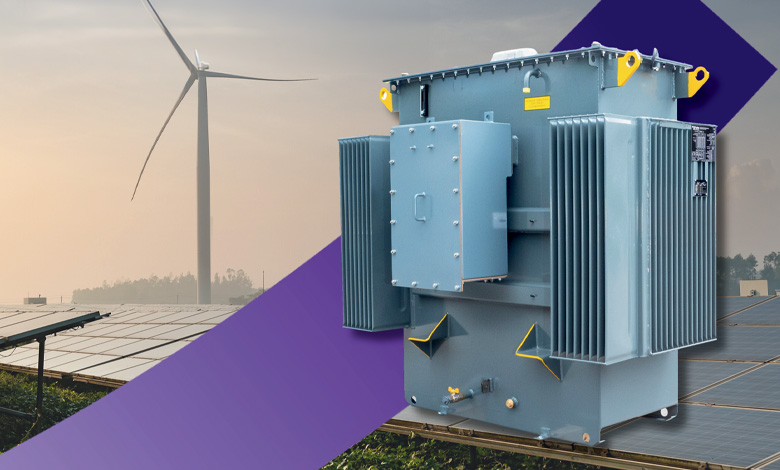
As renewable energy penetration accelerates across Ireland and the UK, the electrical infrastructure supporting solar and battery energy storage systems is undergoing a fundamental shift. The challenge is increasingly not simply connecting generation to the grid, but enabling flexible, bidirectional energy flows between solar PV, battery energy storage systems (BESS), and distribution networks. At the centre of this transition is transformer design.
Kyte Powertech has been designing and manufacturing distribution transformers for nearly five decades, supplying utilities, renewables, infrastructure, and industrial projects across Ireland, The UK, Europe and beyond. Drawing on this experience, the company has developed transformer solutions engineered to support integrated solar and BESS applications, treating generation, storage, and grid interaction as a single, unified system rather than separate assets.
A recent solar PV and BESS installation at a major UK transport hub, now offers a practical example of this approach. Kyte Powertech designed and manufactured a high-efficiency, multi-voltage distribution transformer that serves as the single electrical interface between solar generation, battery storage, and the grid. This architecture reflects a growing industry requirement: simplified system layouts that deliver operational flexibility today while enabling future expansion.
In this integrated configuration, solar energy can be consumed on site, exported directly to the grid, or used to charge the battery system. Stored energy in the BESS can then be dispatched back to the grid or used locally during periods of high demand. This bidirectional capability supports peak shaving, improves self-consumption of renewable generation, and enables more intelligent energy management across the site. Importantly, all operating modes are enabled by a single transformer, without requiring parallel interfaces or additional coupling equipment.
The transformer supplied for the project was rated at 4,000 kVA, providing capacity for the installed solar generation while allowing headroom for future expansion. Operating at a primary voltage of 11 kV, it incorporates dual low-voltage secondary windings rated at 800 V + 800 V. This dual LV configuration enables clear segregation of current and future connections, simplifying the integration of additional storage or generation capacity as system requirements evolve.
Efficiency and regulatory compliance were key design drivers. The transformer achieves no-load losses of just 2.2 kW, with load losses of approximately 23.5 kW at 3,000 kVA, supporting the efficient delivery of renewable energy. Impedance is maintained within a 6.5-7.3 per cent range, depending on loading, ensuring stable voltage regulation and effective fault performance. Full compliance with Tier 2 Eco Design requirements aligns the unit with current and emerging efficiency standards.
Safety and sustainability considerations were equally central to the design. Cooling is provided by KNAN natural ester fluid, offering enhanced fire safety and stronger environmental performance than traditional mineral oil. This makes ester-filled transformers particularly well-suited to sensitive or high-risk environments and supports broader sustainability objectives.
Additional features include DGPT2 protection for enhanced monitoring, Elastimold high-voltage bushings for reliability, and C5M corrosion protection to ensure long-term performance in demanding conditions. Despite its capability, the transformer maintains a compact footprint, enabling installation within constrained sites without compromising performance.
Projects like this highlight how transformer design is evolving from a passive component into an active enabler of renewable energy systems. As solar and storage deployments grow more complex, integrated transformer solutions will play a critical role in delivering flexibility, resilience, and future-proofed infrastructure.
For Kyte Powertech, this represents the future of distribution transformer design: engineered not only to meet today’s grid requirements but also to support the increasingly dynamic energy systems that will define the next phase of the energy transition.

Gokhan Kalkan
Chief Technology Officer
Kyte Powertech
For more information contact www.kytepowertech.com